
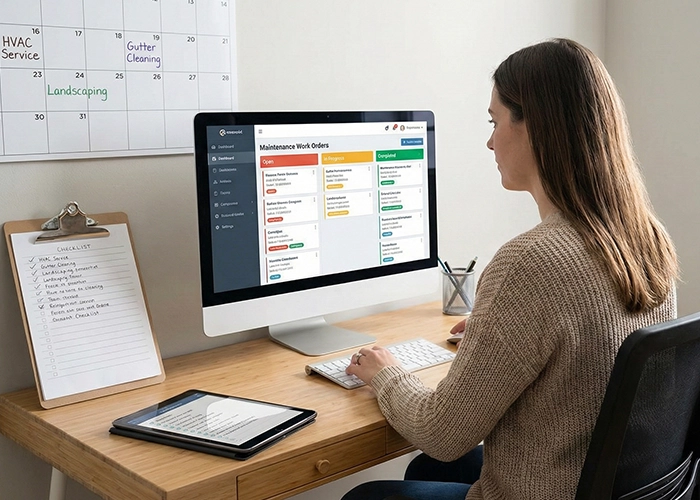
Work orders tend to show up at the worst times. A resident calls during a storm, a vendor cancels, and someone still expects the lobby lights to come back on today. Work order management brings order to that noise so the right work gets done, documented, and closed without guesswork.
What Is Work Order Management?
Work order management is the system you use to capture a request, turn it into a real task, assign it, track it, and confirm it was completed. A strong process protects your budget, your reputation, and your sleep. It also keeps small problems from turning into expensive emergencies.
For property managers, the real goal is consistency. The same kind of issue should be handled the same way across buildings, teams, and shifts. When the process is clear, residents get faster answers, technicians waste less time, and vendors know what “done” means.
The Real Cost of “We’ll Get to It”
A missed request rarely stays small. A slow leak can become a drywall replacement, a mold concern, and a resident dispute all at once. The money matters, but the time matters more when your team is already stretched.
Communication takes the hit, too. Residents feel ignored when there is no update, even if the work is scheduled. Stakeholders feel uneasy when you cannot show what happened, when it happened, and who approved it.
What a Work Order Should Include

A work order is more than a note that says “fix it.” Clear details reduce back-and-forth and help the person doing the work arrive prepared. Better input also leads to better reporting later.
Most teams do well when every work order includes a consistent set of fields. A practical template usually covers:
- Exact location (building, unit, room, and fixture)
- Issue category (plumbing, electrical, HVAC, and so on)
- Priority level with a clear reason
- Photos or short videos when available
- Access notes (lockbox, gate codes, pets, and quiet hours)
- Requester contact details and preferred time window
- Approval status or budget code for billable work
- Special tools, parts, or safety notes
Time stamps still matter, especially when a dispute comes up.
The Details That Prevent Rework
A specific location beats a general one. “Unit 204, kitchen sink cabinet, left side” is easier than “leak in 204.” The expected outcome helps, too, such as “stop drip and confirm no moisture in cabinet base.”
Parts and permissions should be captured early. If a valve replacement needs a shutoff, that should be documented before anyone shows up. If a resident has a pet, the note should not be left for a technician to discover at the door.
Requests vs Work Orders
A request is the raw input. A work order is the structured task that your team can schedule and complete. Separating the two keeps your records clean and helps you avoid tasks being “lost” in email or text threads.
Some properties accept requests from many places, like a resident portal, phone calls, emails, and front-desk notes. Those channels can still work, as long as everything ends up in one place and becomes one trackable work order.
Intake That Holds Up Under Pressure

Work order creation is where many processes fall apart, usually because the intake feels rushed. A simple intake checklist keeps you from making the same clarifying calls all day. It also helps newer staff feel confident.
A short set of standard categories can help, such as plumbing, electrical, HVAC, access control, and housekeeping. The goal is not to force every issue into a rigid box. The goal is to make reporting usable and routing faster.
Intake Rules That Save Time
A single “urgent” label is not enough. A better approach uses clear triggers, like active water, no heat in winter, elevator outage, or security risk. Those triggers guide triage without turning it into a debate.
Photos should be requested when practical. A quick image of a damaged door frame can prevent the wrong parts from being ordered. A short description plus a photo often beats a long paragraph.
Triage That Feels Fair
Triage is easier when everyone agrees on what comes first. Residents judge you by the order you respond, not by the order problems arrived. A consistent system helps you explain priorities without sounding defensive.
A simple four-level approach works for many properties: emergency, same-day, scheduled, and routine. Emergency means safety, water intrusion, or critical systems. Routine means cosmetic items that do not risk damage when delayed.
Avoiding the “Everything Is Urgent” Trap
Clear service standards help. A resident who knows a non-emergency HVAC noise will be reviewed within two business days is less likely to call every hour. Staff feel calmer when they can point to a standard and keep moving.
Vendor coordination should be part of triage, too. Some work waits on access, parts, or permits. That is normal, but the work order should show the reason and the next step.
Scheduling That Respects Your Team

Scheduling is where planning meets reality. A calendar full of tasks means nothing if the route makes no sense or the technician lacks the right tools. A few scheduling rules can make the day smoother without turning it into a rigid script.
A good schedule reflects travel time, building access windows, and job duration. The team’s skill sets should be considered as well, especially for specialty work. When a licensed trade is required, your schedule should show that early.
Routing Without Overthinking It
Clusters work. Grouping tasks by building or floor saves time and reduces late arrivals. Similar work types can be batched as well, like preventive checks in common areas.
Buffer time deserves a place on the calendar. Emergency calls happen, and a schedule with no breathing room will collapse by midday. A realistic plan protects morale and reduces shortcuts.
Communication That Cuts Repeat Calls
Residents do not need a novel. They do need a clear update that matches what is actually happening. Work order management becomes smoother when updates are predictable and respectful.
A good rhythm includes a confirmation, a scheduled window, and a closure note. The closure note should say what was done and whether follow-up is needed. That final message prevents the “Did anyone ever come?” call a week later.
Templates That Still Sound Human
Short templates help staff stay consistent. The tone matters, though, especially during delays. “Parts on order, estimated arrival Tuesday” reads better than “pending.”
Internal notes should stay separate from resident-facing notes. A note about access issues or behavior concerns may be necessary for staff, but it does not belong in a resident message.
Vendors That Feel Like Part of the Process

Vendor work often creates blind spots. A vendor might complete work, invoice it, and disappear, while your system still shows the task as open. Closing that gap protects your records and your relationships.
A clear vendor workflow includes a defined scope, a target date, and a standard way to confirm completion. Photos, sign-offs, or a short completion summary can be required based on the job type.
Keeping Invoices Tied to the Right Work
A work order number should be included on invoices whenever possible. That single habit makes audits easier and reduces “What is this charge for?” conversations. It also helps you track vendor performance over time.
Approval steps should be documented, especially for higher-cost work. The record should show who approved it and when. That clarity protects you when budgets tighten or ownership changes.
Quality Checks That Prevent Callbacks
A closed work order should mean the issue is resolved. A quick quality check helps you avoid repeat visits and resident frustration. That check can be simple, like a supervisor review, a photo, or a short resident confirmation.
Recurring issues should be flagged. If a unit has repeated drain clogs, the pattern matters. A pattern can point to a deeper problem, like aging pipes, misuse, or a cleaning gap.
Safety and Compliance Built In
Safety steps should not live in someone’s head. A checklist can cover lockout procedures, ladder rules, and proper disposal for hazardous items. When the basics are documented, fewer mistakes slip through.
Compliance varies by property and location, but your process should make it easy to prove what you did. Time stamps, notes, and vendor records support you during inspections and disputes.
Metrics That Make Decisions Easier

The right metrics tell you where your system works and where it breaks. They also help you justify staffing and budget decisions with real data. Work order management becomes more valuable when you can see trends.
A few measures tend to matter most, especially when you track them the same way each month:
- Time to first response
- Time to completion
- Backlog by category and priority
- Percentage of repeat work within 30 days
- Vendor turnaround time for outsourced tasks
- Resident satisfaction after closeout
A short post-close survey can work, but the questions should stay simple.
Reading Numbers Without Getting Lost
Context matters. A longer completion time might be fine if parts were needed and updates were sent. A short completion time might hide rushed work and future callbacks.
Seasonal patterns should be expected. HVAC requests rise with heat waves and cold snaps. Landscaping and irrigation issues rise in spring. Planning around those cycles reduces panic.
Tools That Support Your Process
Technology helps when it supports the way your team already works. A tool cannot fix a broken process, but it can make a good process easier. Mobile access matters, especially for technicians in the field.
A solid system allows quick updates, photos, and easy search. It should also keep a clear history for each unit and common area. Integrations can help, but simplicity often wins.
Choosing Tech Without Chasing Shiny Features
A simple rollout tends to stick. Start with intake, scheduling, and closure, then expand to reporting and preventive work. Training should be short and practical, with real examples from your property.
Access levels should be set with care. Residents should see status updates and notes meant for them. Internal notes and vendor pricing should stay protected.
A 30-Day Plan That Sticks
Change feels easier when it is broken into steps. A simple work oder plan can focus your team on the few moves that create the biggest payoff. The goal is not perfection. The goal is fewer dropped balls and cleaner records.
Week one can focus on intake standards and categories. The second week can tighten triage rules and response expectations. Week three can clean up vendor closeout and invoice matching. The fourth week can add light reporting and a quick quality check step.
Common Breakdowns and Simple Fixes
Most problems come from a handful of weak spots. Duplicate requests pile up when staff cannot find existing tickets. Work stays open when the closeout step is unclear. Residents complain when updates feel random.
Clear ownership fixes much of this. A person or role should be responsible for reviewing new requests, even if many people handle the work. A daily check of open items helps, too, especially for high-priority tasks.
When the Process Needs a Reset
A short audit can show what is really happening. A sample of recent work orders can be reviewed for missing fields, unclear notes, or late updates. Patterns usually appear fast when you look at real tickets.
Coaching should be framed as support, not blame. A cleaner system makes everyone’s day easier. Over time, that clarity becomes part of the property’s reputation.
From Chaos to Control
Better work order management does not require a huge overhaul. A few clear standards, consistent updates, and simple checks can create a calmer, more reliable maintenance operation. The payoff shows up in fewer emergencies and more trust.
Related Articles:
- HOA Maintenance Coordination: How to Schedule Upkeep Community Events
- Emergency Maintenance Response: Tips for HOAs and Multifamily Properties
- Maintenance Issue Reports: How Communities Should Handle Them