
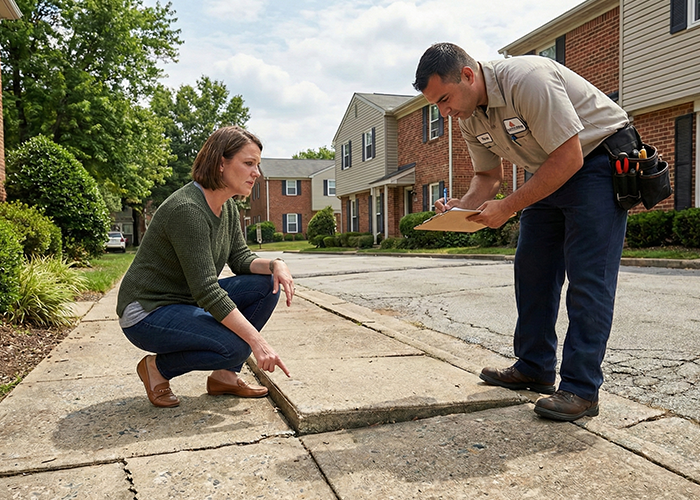
Slip-and-fall hazards tend to show up in the most ordinary spots on common property, especially where traffic stays high, and conditions change fast. A consistent maintenance routine reduces the risk of injuries, complaints, and urgent calls related to slip-and-fall hazards. The goal is simple: safer footing for residents, guests, and vendors every day.
Slip-and-Fall Hazards Early
Slip-and-fall hazards rarely present as a single, obvious defect. A thin film near an entry, a worn stair edge, or a low spot that holds water can quietly raise the risk. Early detection works best when common routes get the same attention as “problem areas.”
A short walk-through on a set schedule helps patterns stand out. High-traffic paths, corners, and transitions between surfaces should stay on that route. The same locations tend to create the same slip-and-fall hazards until the cause is addressed.
Seasonal changes also deserve a reset of expectations. Pollen, leaf debris, algae, and tracked-in grit can change traction even when the surface looks fine. A plan that adjusts with the season helps prevent recurring issues.
Weather and Footing

Weather shifts the ground, making it feel faster than most people expect. Light rain can turn smooth concrete slick. Morning dew can settle on shaded walkways. A quick freeze can turn a shallow puddle into a hard-to-spot skating rink.
Drainage deserves real attention, not just a glance. Downspouts that discharge onto sidewalks, clogged curbside drains, and low spots in paved areas often create wet patches that people step through. A small grading fix can remove a recurring hazard.
Irrigation also plays a role. Overspray near sidewalks and entries can leave slick bands that never fully dry during humid months. Sprinkler timing and head alignment often solve the problem without changing the landscape plan.
Safer Walkways
Walking surfaces set the baseline for safety on common property. A path that feels even and predictable reduces hesitation and sudden steps. Surface transitions matter just as much as the surface itself.
Cracked concrete, lifted panels, and uneven joints can create trip hazards that catch a toe at the worst time. Many of these defects look minor until someone stumbles at night or while carrying packages. Grinding, patching, or panel replacement usually costs less than repeated service calls.
Cleaning methods matter, too. Some products leave residue that reduces grip, especially on sealed concrete or coated floors. A surface can look spotless and still feel slick underfoot.
Better Lighting

Lighting helps residents make good footing choices. Shadows hide changes in elevation. Glare can wash out a step edge. Consistent lighting along the route tends to perform better than a single bright fixture in the wrong place.
A night check reveals what daytime inspections miss. Dark corners, burned-out lamps, and fixtures aimed too high can leave gaps along walkways. Those gaps raise the chance of missteps on cracked pavement or uneven joints.
Lighting controls also need occasional review. Timers that turn on late and sensors that miss movement can leave someone walking through dim zones. A simple adjustment can reduce risk right away.
Dry Entryways
Entry areas collect moisture, dirt, and foot traffic simultaneously. Rain, umbrellas, spilled drinks, and damp shoes can turn the first few steps indoors into a problem zone. Water control at the threshold makes a big difference.
Matting works best when it fits real behavior. Short mats get stepped on. Curled edges become hazards of their own. Flat mats long enough for several steps help shoes shed moisture before people step onto finished flooring.
Response habits matter as much as supplies. A clear process for wet floors keeps cleanup fast and consistent, supporting slip-and-fall prevention without relying on signage alone. Wet floor signs still have a place, but they should back up action, not replace it.
Safe Stairs and Ramps
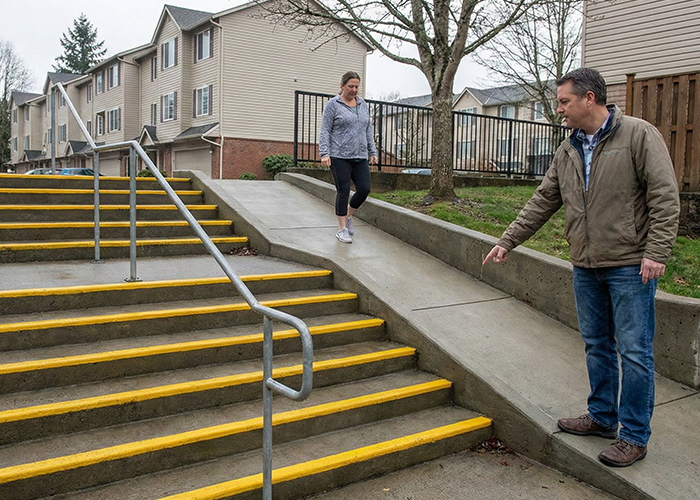
Stairs demand special attention because people use them on autopilot. A worn tread, loose nosing, or slick coating can cause a fall in seconds. Handrails matter, too, especially on the first and last step.
Visual clarity helps. Contrast at the stair edge makes depth easier to judge, especially in dim light. Consistent tread depth and stable nosings reduce surprises that lead to slips.
Ramps need the same level of care. Standing water, algal growth, and worn textures can quickly change traction. A ramp that stays clean, drained, and well-lit feels safer for everyone.
Wet Amenities
Pool decks, locker rooms, and shower areas pose inherent risks. Moisture remains present and spreads into nearby corridors via foot traffic. The flooring may be designed for wet use, but maintenance still affects its performance.
Cleaning routines should match the surface type. Soap film, body oils, and sunscreen can build a slick layer that looks clean but feels unsafe. Proper dilution, thorough rinsing, and periodic deep cleaning usually reduce that film.
Footwear changes in these areas as well. Bare feet and flip-flops show up more often, so traction matters even more. A focus on drainage and surface texture keeps slip-and-fall hazards from becoming “normal” in amenity zones.
Safer Parking Areas

Parking lots bring different problems than sidewalks. Oil drips, loose gravel, standing water, and worn striping can all create footing issues. Wheel stops and speed bumps also become hazards when visibility is low.
A pedestrian view helps during inspections. Small potholes and broken asphalt edges can twist an ankle during a short walk to the mail area. Clear striping and visible curb edges guide residents along safer lines.
Drainage patterns should be checked after storms. Low points near curb ramps and walkway connections tend to hold water. Those spots also tend to freeze first in colder regions.
Clean as You Go
Housekeeping keeps common property predictable. Leaves on stairs, sand near entries, and clutter in breezeways all change how people step. A tidy route reduces surprises underfoot.
A realistic schedule is more effective than an ideal one. High-traffic areas need more frequent attention, even when the rest of the site looks fine. The same approach applies to trash areas where spills and debris frequently occur.
A few simple checkpoints support consistency without turning the day into paperwork:
- Entry mats lying flat and dry
- Debris cleared from stairs, landings, and corners
- Spills handled fast, with clean-up tools nearby
- Wet zones checked for film and tracked moisture
Timely Repairs
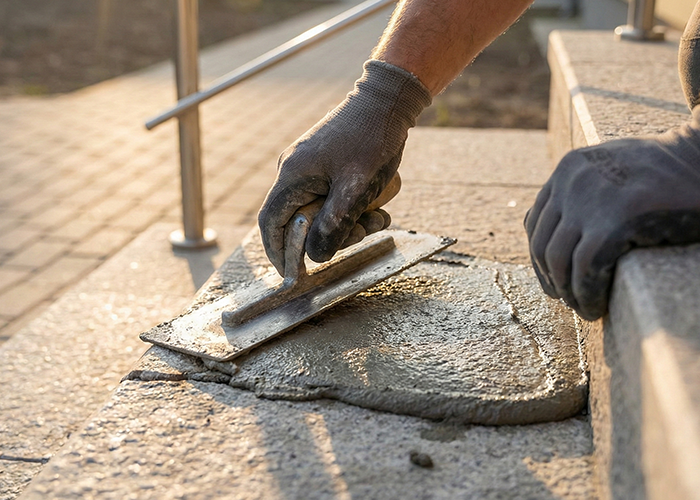
Timing changes outcomes. Small defects that persist for weeks often escalate into larger problems that cost more and increase risk. Walkway and stair issues deserve top priority because they affect daily movement.
A smart triage system helps when the list gets long. Surfaces, lighting, railings, and drainage should stay near the top. Quick repairs in those areas reduce the chance that slip-and-fall hazards linger between inspections.
Temporary measures need care, too. Cones and tape can warn people, yet they can also create new obstacles if placed poorly. A stable temporary patch usually performs better than a sign that people ignore.
Simple Records
Documentation supports follow-through. A brief log that captures what was seen, what was done, and what is pending helps keep everyone aligned. Photos before and after a repair help track recurring spots.
Patterns show up quickly with consistent notes. A recurring wet patch at one downspout may indicate grading issues. A recurring slick zone near a doorway may indicate a cleaner, a worn finish, or a mat issue.
Records also support vendor accountability. Service dates and response times become easier to confirm. The result is less guesswork and fewer open loops tied to slip-and-fall hazards.
Clear Vendor Standards
Vendor work affects safety every day. Cleaning methods can change traction. Landscaping can push debris onto walkways right after they are cleared. Coordination keeps one crew from undoing another crew’s work.
Clear scope language reduces misunderstandings. Expectations for inspections, debris control, mat care, and weather response should be written in plain terms. A short checklist attached to a contract often improves results.
A few standards tend to matter most:
- Response expectations for spills, standing water, and ice
- Approved cleaning products by surface type
- Debris control near sidewalks, stairs, and entries
- A clear path for reporting hazards noticed during service
Quick Training
Training does not need to feel formal to be effective. Short refreshers keep habits sharp, especially with staff turnover and vendor rotations. A shared approach reduces the “someone else will handle it” gap.
Clear language helps, too. One definition of “urgent,” one reporting method, and one set of basic response steps keep action consistent. Faster responses reduce the time a hazard stays active on common property.
Resident communication can support the plan when it stays practical. Notices about resurfacing, wet-area cleanings, or winter service timing reduce the risk of shortcuts and confusion.
Safer Steps
Common property remains safer when the basics are handled early, consistently, and with how people actually walk in mind. Fewer surprises underfoot usually means fewer complaints, fewer urgent calls, and fewer injuries tied to slip-and-fall hazards. A consistent plan turns slip-and-fall hazards into rare exceptions rather than routine problems.
Related Articles: