

A commercial parking lot acts as the front door to any business or facility. It is the first thing a visitor sees and the last thing they experience before leaving your property. Maintaining this space through regular parking lot cleaning ensures that first impression remains positive while protecting your physical assets from long-term damage.
The Importance of Routine Parking Lot Cleaning
Your parking area faces constant exposure to harsh environmental factors and heavy vehicle traffic every day. Over time, dirt, gravel, and automotive fluids can accumulate on the surface of the pavement. If these materials are left alone, they act as abrasives that slowly grind away at your asphalt or concrete.
Regular sweeping removes the grit that leads to premature surface wear and costly cracks. When you prioritize a clean lot, you are actually extending the life of your investment. It is much more affordable to sweep a lot weekly than it is to resurface it every few years.
Safety is another major factor that facility managers must always keep in mind. Loose debris and oil spills create significant slip-and-fall hazards for pedestrians and employees alike. A clean surface provides better traction and ensures that safety markings remain visible to everyone on the property.
How Power Washing Removes Deep Stains
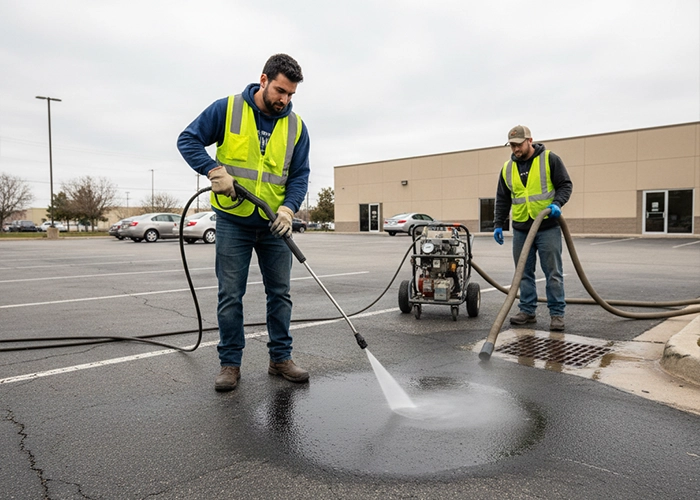
While sweeping handles the loose debris, power washing is necessary for deeper cleaning tasks. Vehicles often leak oil, coolant, and brake fluid while they are parked in your stalls. these chemicals do more than just look ugly on the ground.
Petroleum-based products can actually soften asphalt by breaking down the chemical bonds in the binder. This leads to potholes and a crumbling surface that is difficult to repair properly. High-pressure water effectively lifts these stains before they have a chance to penetrate the surface layers.
Professional cleaning crews use specialized equipment to ensure the water is managed correctly. This prevents polluted runoff from entering local storm drains and keeps your facility in compliance with environmental regulations. A deep clean once or twice a year keeps the surface looking like new.
Impact of Debris on Drainage Systems
The health of your parking lot is closely tied to how well it handles water during a storm. If your lot is covered in leaves, trash, and silt, those items will eventually find their way into your catch basins. Clogged drains lead to standing water, which is a primary enemy of paved surfaces.
When water sits on asphalt, it seeps into small pores and begins to weaken the subbase. In colder climates, this water freezes and expands, which causes the pavement to heave and crack. Keeping the area clear of debris ensures that your drainage system can do its job effectively.
Maintenance specialists often include drain inspections as part of a standard cleaning package. This proactive approach helps you catch minor blockages before they turn into major flooding events. It is a simple step that saves a lot of stress during the rainy season.
Seasonal Maintenance Needs for US Properties
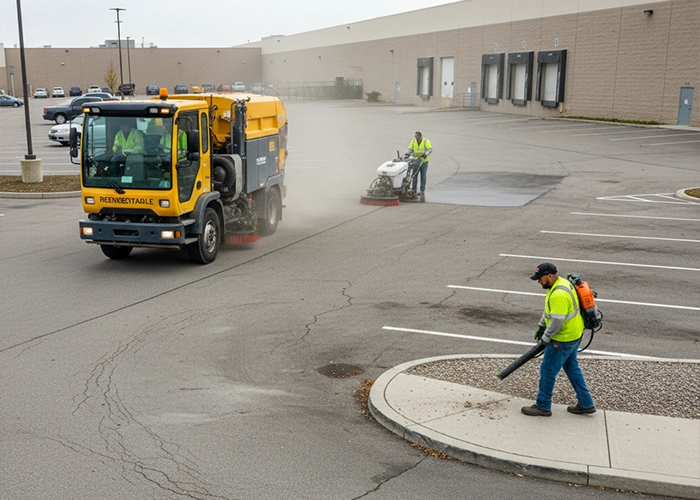
Parking lots change quite a bit depending on the time of year and the local weather. In the spring, most lots need a thorough cleaning to remove the salt and sand left behind from winter snow removal. These materials are highly corrosive and can damage both the pavement and the metal components of your building.
During the fall, fallen leaves become the primary concern for most maintenance teams. Wet leaves are incredibly slippery and can hide trip hazards like uneven pavement or small potholes. Frequent sweeping during these months keeps the lot safe and prevents the drains from getting overwhelmed.
Summer brings its own set of challenges with high heat and intense sunlight. UV rays can dry out asphalt, making it more brittle and prone to cracking under heavy loads. A clean surface allows you to inspect the lot for signs of sun damage and plan for sealcoating or other protective measures.
Enhancing Curb Appeal and Brand Image
A well-maintained exterior tells your customers that you care about the details of your business. When people pull into a lot that is free of trash and oil stains, they feel safer and more comfortable. This sense of order reflects well on the professional standards of the company.
Neglected parking areas often attract more litter and even illegal dumping over time. There is a psychological effect where people are more likely to toss trash in a place that already looks dirty. Keeping the area spotless discourages this behavior and keeps the property looking its best.
Property values are also tied to the physical condition of these outdoor spaces. If you ever plan to lease or sell the facility, a clean parking lot is a major selling point. It shows potential tenants or buyers that the property has been cared for by a diligent maintenance team.
Choosing the Right Cleaning Equipment
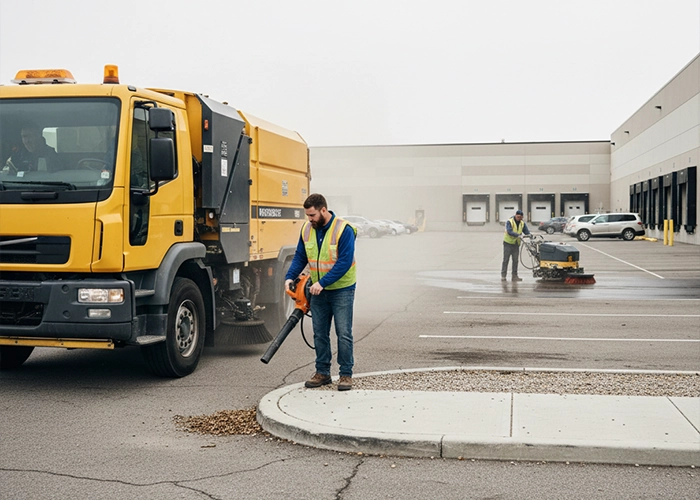
Professional maintenance teams use a variety of tools to get the job done right. Regenerative air sweepers are common for large lots because they pick up fine dust that traditional brooms might miss. This technology uses a high-velocity air stream to lift debris into a hopper.
For smaller areas or corners, manual blowing and hand-sweeping are still very effective. These methods ensure that every inch of the property is addressed, including sidewalks and curbs. No machine can quite match the precision of a human technician looking at the specific needs of a corner.
Scrubbing machines are sometimes used for heavy-duty industrial lots where grease is a constant problem. These units apply cleaning solutions and agitate the surface to break up tough grime. Using the right tool for the specific type of soil ensures the best results without damaging the lot.
Benefits of Professional Maintenance Contracts
Many facility managers find that setting up a recurring service contract is the most efficient way to stay on top of cleaning. A scheduled plan ensures that the work happens like clockwork without the need for a new work order every week. This consistency is key to long-term pavement health.
Professional crews also have the training to spot problems that an untrained eye might miss. They can alert you to new cracks, fading stripes, or signs of subbase failure while they are performing their routine tasks. This early warning system allows you to make minor repairs before they become emergencies.
Outsourcing this work also frees up your internal staff to focus on building systems and tenant needs. Professional companies bring their own equipment and insurance, which reduces the liability and overhead for the property owner. It is a cost-effective way to ensure high-quality results.
Environmental Responsibility in Cleaning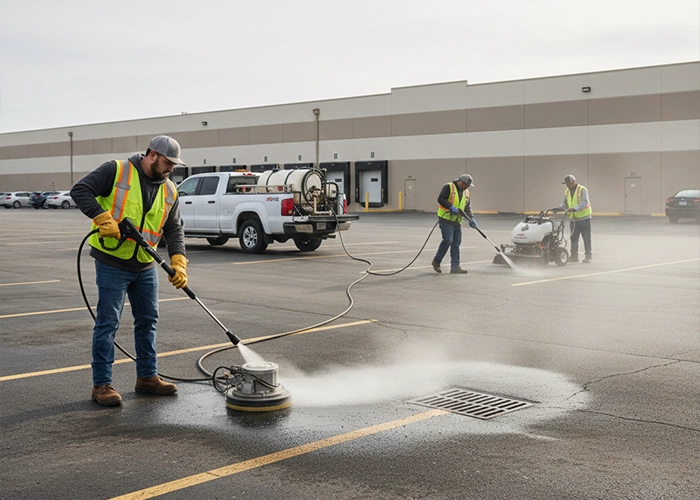
Modern cleaning practices prioritize the protection of the local environment. Using biodegradable detergents and soaps is now a standard part of professional parking lot care. These products break down naturally and do not harm local wildlife or plants.
Water reclamation systems are often used during large-scale power washing projects. These systems capture the wastewater so it can be filtered and disposed of properly. This prevents oils and heavy metals from the parking lot from reaching the local water table.
Being a good neighbor means managing the noise and dust associated with cleaning. Most professional crews schedule their work during off-peak hours to minimize the impact on your operations. They also use dust suppression techniques to keep the air clear while they sweep.
Maximizing the Life of Your Asphalt
Asphalt is a flexible pavement that requires specific care to remain durable. Keeping it clean is the first step in a larger preservation strategy. When the surface is free of dirt, it is much easier to apply sealcoat or crack filler when the time comes.
Sealcoating acts as a sunscreen for your parking lot, but it can only be applied to a perfectly clean surface. If there is any dust or oil present, the sealant will not bond correctly and will peel away quickly. Routine cleaning prepares the surface for these vital protective treatments.
When you look at the total cost of ownership for a parking facility, maintenance is a small fraction of the replacement cost. Spending a little bit each month on cleaning can add a decade or more to the life of the pavement. It is one of the smartest financial decisions a maintenance specialist can make.
Improving Pedestrian Safety and Accessibility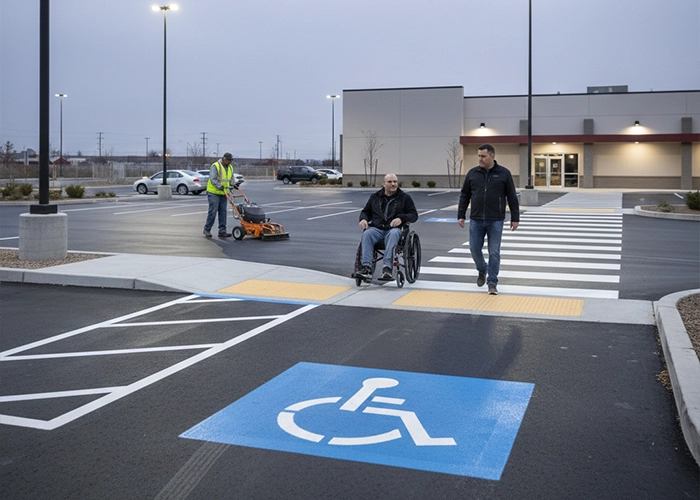
A clean parking lot is a more accessible parking lot for everyone. When sand and gravel build up in handicap stalls, it can make it difficult for people with mobility aids to move safely. Keeping these areas clear is a matter of both safety and compliance with accessibility laws.
Clear visibility of painted lines and symbols is essential for directing traffic flow. If the surface is covered in dirt, drivers may not see crosswalks or stop bars, which leads to confusion and accidents. Cleaning ensures that all your safety markings do their job.
Lighting also works better when the surface is clean. Dark oil stains absorb light, while a clean, grey or black surface helps reflect it. This improves the overall brightness of the lot at night, which makes employees and visitors feel much more secure as they walk to their cars.
Invest in Your Facility’s Future
Taking care of your parking area is an ongoing responsibility that pays off in the long run. By keeping the surface clean and the drains clear, you protect the structural integrity of your property. You also create a welcoming environment for every person who visits your business.
Keep your lot safe and inviting
Consistent care is always better than trying to fix years of neglect all at once. If you haven’t looked closely at your parking lot lately, now is a great time to evaluate its condition. A simple cleaning plan can make a world of difference in how your property looks and performs.
Related Articles: