

A well-run community feels easy because the work happens on time. HOA maintenance coordination gives boards, managers, and residents a shared way to plan upkeep without constant reminders. With a clear schedule and a few repeatable habits, maintenance days can feel like normal community life instead of a disruption.
HOA Maintenance Coordination Starts With a Shared Calendar
A calendar keeps the plan visible, which keeps the plan real. HOA maintenance coordination works best when one calendar holds routine service dates, inspection windows, and community upkeep days. Fewer surprises show up when everyone looks at the same source.
Clarity matters more than fancy tools. A simple shared calendar, paired with a written maintenance plan, helps the board track what must happen and when. That written plan should note the task, the responsible party, the access needs, and the expected noise or downtime.
Define the Purpose of Each Upkeep Day
A maintenance event should solve a specific problem. Some communities use upkeep days for hands-on volunteer tasks, while others use them for vendor-led work like pressure washing, gutter cleaning, or pool servicing. The same date can host both types, as long as the scope stays clear.
Resident-facing events work best when the tasks feel visible. Mulch refreshes at the entrance, lighting checks on walking paths, and small touch-ups in the clubhouse show immediate results. Vendor-heavy work fits better when the site can be staged, access is controlled, and equipment can move safely.
Build an Inventory Before Scheduling Begins
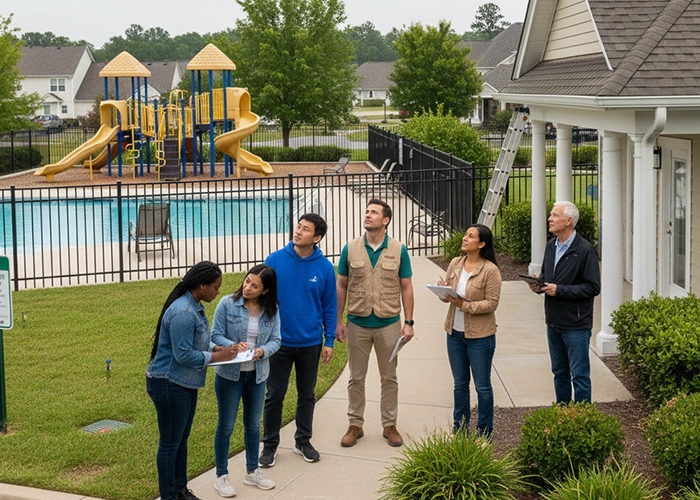
An asset list turns “we should do this” into “we will do this.” Common-area roofs, drains, playgrounds, gates, irrigation, pavement, and building systems all compete for attention. A simple inventory reduces guesswork when the calendar fills up.
Governing documents and reserve studies often shape responsibility. A board may handle roofs while owners handle windows, or the reverse, depending on the community. Those lines should be clear before a schedule is announced.
A quick starting inventory can include:
- Entry features and signage
- Sidewalks, paths, and lighting
- Landscaping and irrigation zones
- Pool, spa, and clubhouse systems
- Roofs, gutters, and drainage points
- Parking areas, curbs, and striping
Set a Yearlong Rhythm Residents Remember
Predictability lowers tension. Seasonal patterns help residents plan around work trucks, temporary closures, and noise. A yearlong rhythm also helps vendors reserve time before peak seasons get crowded.
Local weather deserves a real seat at the table. Spring can focus on drainage, irrigation start-ups, and exterior washdowns. Summer can lean into pavement repairs, pool care, and shade structure checks. Fall often fits gutter cleaning, tree work, and storm prep. Winter can cover lighting, safety checks, and smaller indoor projects.
Choose Dates With Real Maintenance Windows

A maintenance window is a stretch of time during which access remains easy. School drop-off times, major holidays, and community-wide travel weekends can create avoidable conflicts. A thoughtful date choice prevents reschedules that cost money and patience.
Time-of-day planning matters, too. Early morning work can reduce heat stress for crews in warmer regions, yet it may frustrate residents who work nights. Midday work can avoid commuter peaks, yet it can overlap with deliveries and pet walks. One consistent pattern, announced early, reduces complaints over time.
Line up Vendors Early With Clear Scopes
Vendor scheduling should start sooner than most boards expect. Good contractors book out, especially for spring and storm-season work. Early outreach gives the association time to compare bids, confirm licensing, and align on site rules.
Scope clarity protects everyone. A simple scope should state what gets done, what gets excluded, and what counts as an extra charge. Access details should be included, such as gate codes, parking areas, water hookups, and quiet hours.
Insurance and safety paperwork should not feel like a formality. Certificates, worker safety plans, and contact lists reduce risk on the day work happens. A single point of contact for each vendor keeps messages clean.
Assign Roles That Prevent Delays

Volunteer boards run on a limited time. Clear roles prevent delays when a question pops up during scheduling or on the day of service. A short role list also helps a maintenance specialist partner know who can approve changes.
One “owner” for each part of the plan keeps things moving. That ownership can rotate, but it should be documented before notices go out. Resident committees can help with planning and turnout, while the board and manager maintain authority and records.
Common roles that keep upkeep events smooth include:
- Board liaison for approvals and budget limits
- Manager or coordinator for vendor scheduling and notices
- Site lead for day-of decisions and safety checks
- Resident volunteer lead for sign-ups and reminders
Use Communication That Prevents Confusion
Residents accept inconvenience when they understand the why and the when. HOA maintenance coordination improves when messages arrive early, repeat at the right pace, and stay consistent across channels. A short notice sent three times often beats a long notice sent once.
A good notice answers residents’ first questions. Dates, times, affected areas, and how to prepare should appear near the top. Parking changes, gate access, pet safety, and noise expectations deserve plain language.
Helpful notice elements can include:
- What work is happening and where
- Start and end times, plus rain dates if used
- Access changes for parking, gates, or amenities
- Preparation steps for residents, such as moving vehicles
- A single contact method for questions
Plan the Event Like a Small Project
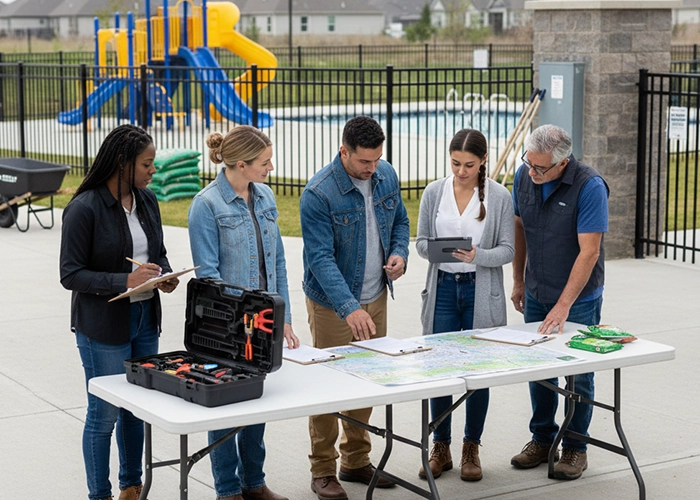
A maintenance day runs more smoothly when tasks are staged. Materials should arrive before the crew needs them. Keys, gate codes, and utility access should be confirmed in advance.
A simple timeline helps everyone stay aligned:
- Four to six weeks out: vendor confirmation, scope review, resident save-the-date
- Two weeks out: second notice, site walk-through, access planning
- Two to three days out: final reminder, staging plan, contact list check
- Day-of: check-in, progress updates, closeout walk-through
This rhythm gives room for weather pivots and last-minute conflicts. It also keeps the board out of constant emergency mode.
Keep Safety and Access at the Center
Shared spaces bring extra risk during active work. Foot traffic, pets, and moving equipment can collide fast. Clear signage and temporary barriers reduce the chance of injury and property damage.
A designated site lead should guide the day. That person can be a manager, a maintenance coordinator, or a vendor foreman, depending on the scope of the project. Communication between vendors matters when more than one crew works on-site at the same time.
Traffic plans can stay simple. A few cones, a clear detour path, and visible notices near entrances can go a long way. Emergency access should remain open, and fire lanes should stay clear.
Prevent Lost Work With Simple Tracking

Maintenance work can disappear after the truck leaves if no record exists. A basic work order log protects the association and supports better planning next season. Photos, short notes, and completion dates create a history that makes budgeting easier.
Checklists keep quality steady. A “before” and “after” photo for key areas, plus a quick punch list, can catch small misses. Vendor invoices should match the scope, and any change orders should be recorded.
Digital tools help, yet paper can still work. A single binder with scopes, contacts, and inspection sheets can be enough for smaller communities. Consistency matters more than the platform.
Match the Plan to the Budget
A schedule only works when money backs it up. Operating budgets typically cover routine service, minor repairs, and recurring upkeep. Reserve funds usually cover major replacements and large repairs, based on the association’s documents and local rules.
Preventive care can extend useful life and reduce surprise failures. A reserve study can support timing for big-ticket items, while the operating plan handles routine attention that keeps assets healthy. HOA upkeep coordination improves when those two tracks speak to each other instead of competing.
Cost planning stays easier when each event has a budget range. Strong HOA maintenance coordination ties the schedule to the budget, keeping planned work on track. A buffer for weather delays and small extras prevents constant board approvals.
Run the Day With a Calm Playbook
A short morning walk sets the tone. The site lead can confirm staging areas, review safety needs, and flag resident concerns early. Quick updates during the day can prevent rumors from spreading.
Resident questions should flow to one place. A dedicated email alias, a portal message thread, or a single phone number helps. That single channel also creates a record of issues that may require follow-up.
A closeout walk should happen before crews pack up. A simple checklist can confirm gates work, trash is removed, and access is restored. That last step is where trust is earned.
Improve the Next Event With Better Notes
A debrief should feel practical, not formal. What went well, what ran late, and what residents complained about can guide the next schedule. Vendor performance notes also help at renewal time.
Small data points add up. Completion dates, change orders, and common trouble spots can reveal patterns. Over time, HOA maintenance coordination becomes easier because the calendar reflects real history, not hope.
This is where event maintenance coordination becomes second nature, because the community repeats the same planning steps each season. A little structure supports better results without adding stress.
Keeping the Community in Sync
A clear calendar and steady communication can turn upkeep days into predictable community moments. HOA maintenance coordination works best when planning starts early and responsibilities stay clear. Over time, a well-paced schedule protects property values and makes shared spaces feel cared for.
Related Articles:
- How to Reduce Maintenance Backlogs
- HOA Maintenance Records: Benefits and How to Keep Them Properly
- How to Create a Long-Term Maintenance Plan