
Maintenance problems rarely start as emergencies. Small leaks, loose railings, and tired HVAC parts usually give plenty of warning, but only if someone is paying attention. HOA maintenance records turn those warning signs into a clear story that a board, manager, and vendor can actually act on.
Why HOA Maintenance Records Matter
HOA maintenance records are the written, saved proof of what was inspected, what failed, what was fixed, and what it cost. That trail may live in a binder, a shared drive, or a property management system, but the purpose stays the same. Better decisions show up when the history is easy to find.
For many communities, homeowners association maintenance records also become the bridge between volunteers and professionals. A new treasurer can understand last year’s roof repairs in minutes instead of guessing through old emails. A maintenance vendor can see patterns and recommend the next step without starting from zero.
Long-term care gets easier when HOA maintenance records cover the full life of a component. Major replacements belong next to the smaller repairs that led up to them. A clean timeline helps boards explain why a project is needed now, not “sometime later.”
Clarity for Budgets and Reserves
Budget season feels less stressful when the numbers have a backstory. A line item for elevator service makes more sense when last year’s work orders and invoices are right there. That context helps boards explain costs to owners without sounding vague or defensive.
Reserve planning benefits, too. Roofs, pavement, boilers, gates, and fire-life safety systems all age on their own timelines. A reliable record of repairs and inspections supports more accurate reserve contributions and fewer surprise special assessments.
Over a few years, spending patterns start to look predictable. Repairs grouped by system, location, and vendor create an honest picture of “normal” costs. Future budgets become easier to build when the community knows what it is actually paying for.
Faster Decisions During Real-World Problems
Calls tend to stack up fast once something breaks. A flooded riser, a broken pool pump, or a failed access gate puts pressure on the board to choose a vendor quickly. The easiest way to avoid panic is to know what happened the last time.
Past notes reveal which contractor responded on time, which proposal matched the final bill, and which fix actually held. Those details shorten meetings and reduce second-guessing. Even better, the same history can prevent repeated “band-aid” repairs that never solve the root cause.
During after-hours emergencies, the right detail can save hours. A record that lists shutoff locations, equipment model numbers, or prior leak points gives a vendor a head start. Response time improves when the basics are not being hunted down in the dark.
Vendor History That Holds Up
Good vendors appreciate organized communities. Clear documentation tells a contractor that approvals will not disappear and payments will not stall. That confidence can lead to quicker scheduling, especially during peak seasons when everyone is trying to book the same trades.
Accountability improves as well. A service provider’s scope, start date, completion date, and warranty terms should not depend on someone’s memory. When those basics live in one place, disagreements get resolved with facts instead of frustration.
Pricing becomes easier to evaluate once older proposals are easy to pull. A past scope shows what was included, which materials were used, and what unit costs looked like. Future bids feel more apples-to-apples when the community knows what it is comparing.
Warranty Proof When Needed
Warranties sound comforting until a claim is needed. A manufacturer may ask for the installation date, model number, proof of routine service, and photos of the issue. The same goes for many larger repairs, including waterproofing, roofing, and mechanical replacements.
HOA maintenance records support those claims by showing care and continuity. A simple log of filter changes or annual inspections can be the difference between a covered repair and a costly denial. That kind of protection is hard to appreciate until the moment it matters.
Insurance claims can follow a similar path. Water damage, storm events, and vandalism often require timelines, photos, and vendor notes. A strong file makes the adjustment process feel less like a scramble.
Preventive Maintenance That Stays on Track
Preventive work is easy to skip when the calendar is busy. A short checklist, tied to real records, keeps small tasks from becoming big tickets. Many boards see fewer last-minute repairs once routine items are tracked and confirmed.
Seasonal rhythms help, especially for communities with pools, irrigation, storm drains, and exterior lighting. A simple log can show when filters were changed, when valves were exercised, and when inspections were completed. The next scheduled visit becomes obvious when the last one is documented.
Progress shows up when preventive work is taken seriously. HVAC systems tend to last longer, water intrusion is caught sooner, and common areas stay safer. Over time, HOA maintenance records become the quiet tool that protects the budget.
What Belongs in the File
A useful record system is more than a stack of invoices. The goal is to preserve the full story from first report to final sign-off. HOA maintenance documents usually fall into a few practical buckets that can be copied across most communities.
- Asset list with serial numbers, locations, and basic specs
- Preventive maintenance schedules and checklists
- Inspection reports for roofs, façades, plumbing, electrical, and life-safety systems
- Work orders, proposals, approvals, and change orders
- Invoices, lien waivers when applicable, and proof of payment
- Photos or short videos before, during, and after the work
- Warranty terms, manuals, and service agreements
- Vendor contacts, insurance certificates, and license details where required
- Resident communications tied to major work, including notices and updates
A short summary page can help, too. One page per system, with “last serviced” and “next scheduled,” makes board meetings faster. That overview also helps a new manager get oriented quickly.
A Folder Setup That Makes Sense

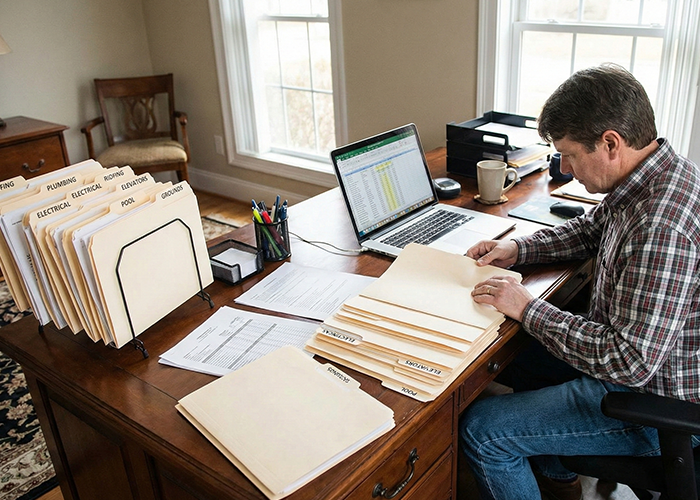
A simple structure beats an “everything in one place” dump. Many associations do well with folders based on building components, such as Roofing, Plumbing, Electrical, Elevators, Pool, and Grounds. Another common setup uses location first, then system, which works well for multi-building sites.
Naming habits matter more than people expect. A consistent pattern like “YYYY-MM-DD Roof Leak Building B Unit 204” makes sorting and searching much easier. The same approach helps later when owners ask about a repair history during a sale or a dispute.
A single “source of truth” prevents split records. Board emails, vendor portals, and text messages can still exist, but the final file should land in one home. That habit reduces confusion and stops version mix-ups.
Notes That Stay Consistent
Consistency tends to break down when documentation is optional. A short, repeatable template keeps everyone aligned, including managers, board members, and vendors. A basic closeout note can stay simple and still cover what matters.
The most helpful notes include the problem reported, the likely cause, who inspected it, what was done, and what should be watched next. Costs, dates, and photo proof belong there as well. When that format stays steady, your future self will thank you.
A work order routine keeps the file complete without extra effort. Intake works best with a work order number that ties emails, approvals, photos, and invoices together, and closeout should include a final note plus the paid invoice. That last step also confirms the community received what it paid for.
Digital Storage Without Headaches

Digital storage usually makes access easier, but only when permissions are thought through. A board portal or cloud-based folder can work well, especially when it supports version history. Shared access reduces the odds that records vanish when a volunteer steps down.
Security still matters. Strong passwords, two-factor authentication, and limited editing rights should be normal, not optional. A simple rule can help: most people should view, fewer people should edit, and only one or two people should manage the system.
Backups deserve a place in the plan. A second copy, stored separately, protects against accidental deletion or account loss. That small safeguard keeps HOA maintenance records available when they are needed most.
Owner Access and Privacy
Transparency builds trust, but boundaries keep everyone safe. Most states and governing documents give owners some level of record access, yet not every file belongs in a public folder. A clean separation between “association business” and personal data prevents trouble.
Community maintenance records should be easy to produce without exposing resident information. Vendor invoices and inspection reports are often shareable, while items tied to individual units, delinquencies, or private complaints may need redaction. A consistent process for requests keeps responses calm and timely.
A Retention Plan That Works
A good system stores what you need and avoids clutter that makes searching harder. Some documents have long-term value, such as warranties, major project files, reserve studies, and life-safety inspections. Routine work orders may matter less after several years, especially when no pattern or dispute exists.
State laws and governing documents can set minimum retention rules, so a quick check with legal counsel is worth it. After that, a board-approved schedule makes the expectation clear for everyone. Better record-keeping becomes much easier when it is treated as standard operating practice.
Paper Trail, Real Relief
Day-to-day work runs more smoothly when HOA maintenance records are easy to locate and easy to understand. A simple structure, consistent notes, and secure access remove a lot of friction from maintenance planning. Over time, the community gets fewer surprises and a stronger sense that the property is being cared for.
Related Articles: