

Cold snaps can strain pipes, water heaters, and drains, so being ready for winter plumbing issues matters for every home. A few simple checks help prevent leaks, bursts, and surprise shutdowns when temperatures drop.
How Winter Plumbing Problems Start
Winter plumbing issues tend to begin with a quick temperature swing. Pipes contract, tiny gaps widen, and cold air sneaks through openings around hose bibs, sill plates, and crawlspace vents. Even a short freeze can slow water flow and bring pressure spikes that stress fittings.
Homes with older galvanized or copper lines see more problems during long freezes. Thin insulation, unheated garages, and pipes that run along exterior walls add risk. Vacation schedules play a role as well, since low water movement raises freezing odds.
Signs the Pipes are at Risk
Early warning helps. Unusual sounds, weak flow, and visible frost should prompt action before damage spreads. A few clues show up first, often during the late evening or right before dawn.
- Water slows to a trickle, especially at faucets along exterior walls
- Frost lines appear on exposed pipes in garages, crawlspaces, or under sinks
- Taps spit air, pressure fluctuates, or toilets refill sluggishly
If a faucet stops completely, assume ice has formed somewhere in the line. The main valve location should be known in advance, because a quick shutoff limits damage.
High-Risk Spots inside and outside the Home
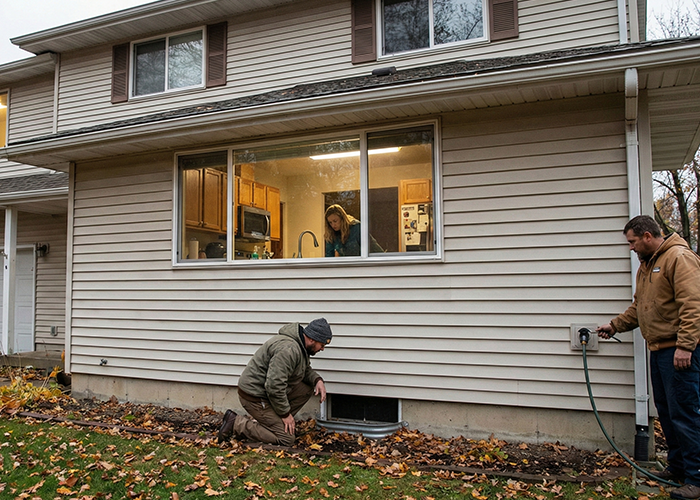
Kitchens with sinks on exterior walls face frequent trouble. So do laundry rooms over unheated garages. Long runs to a second-floor bathroom create cool sections where ice forms first.
Outside, hose bibs, irrigation lines, and vacuum breakers carry extra risk. Crawlspaces with open vents and thin skirting stay cold enough to freeze pipes fast. Basements with drafty windows and gaps around the sill plate also invite trouble.
What To Do before a Freeze
Preparation helps winter plumbing hold steady during the first hard freeze. Foam sleeves on exposed pipes keep heat in place. Faucet covers reduce heat loss at hose bibs and help protect the short pipe section behind the wall.
Caulk and weatherstripping around sill plates, hose bib penetrations, and basement windows cut cold drafts. The home’s thermostat should avoid deep nighttime setbacks during a cold front. Warm air under sinks matters too, so vanity and cabinet doors can be left ajar when temperatures plummet.
A slow drip at far-run faucets maintains water movement and reduces freeze potential. The drip should come from both hot and cold sides, because both lines can freeze.
Safe Thawing When a Pipe Freezes
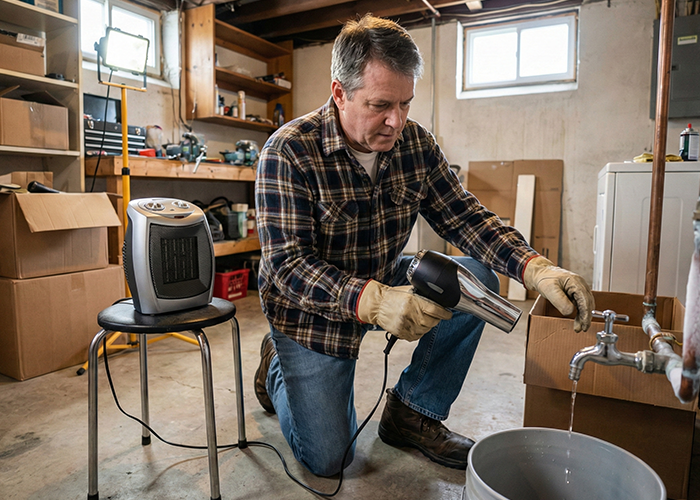
Once a line freezes, safe thawing prevents a small problem from turning into a burst. The faucet should be opened first, because melting ice needs a place to go. Gentle heat works best.
A hair dryer, a space heater set at a safe distance, or a heating pad can be used on the cold section. Open flames are never safe for thawing. If the frozen section cannot be reached, the main valve should be ready in case a split appears during the thaw.
Preventing Burst Pipes after a Thaw
After water begins to flow, a short inspection helps catch leaks. Each visible run should be checked for bulges or fine mist. A pressure drop after the thaw hints at a hidden crack in a wall or ceiling cavity.
Water hammer arrestors and a functioning pressure-reducing valve lend stability during winter plumbing events. When a home has high street pressure, the strain on pipes during a thaw rises. A licensed plumber can test and adjust the valve to a safe level.
Water Heaters in Cold Weather

Water heaters work harder during cold spells. Inlet water arrives colder, so the unit runs longer to achieve the same temperature. A setting around 120°F balances comfort and safety for most homes, and it keeps energy use in check.
Older tanks benefit from a quick flush to remove sediment that insulates the burner or elements from the water. Relief valves and expansion tanks should be in good shape before extreme cold arrives. A failing expansion tank can show up as fluctuating pressure, dripping relief valves, or short cycling.
Drains and Waste Lines in Winter
Slow drains show up more often in January. Grease hardens in cooler pipes, then minor buildup becomes a clog. Cooking oils, bacon fat, and gravy should cool and go into the trash rather than the sink.
Roof vents matter to avoid many winter plumbing issues. A blocked vent, sometimes caused by rime or snow caps, leads to gurgling drains and sewer smells. A gentle clearing, performed safely from the ground when possible, restores airflow. If a roof climb is required, a professional should handle the task.
Snow Plumbing Loads and Exterior Fixtures
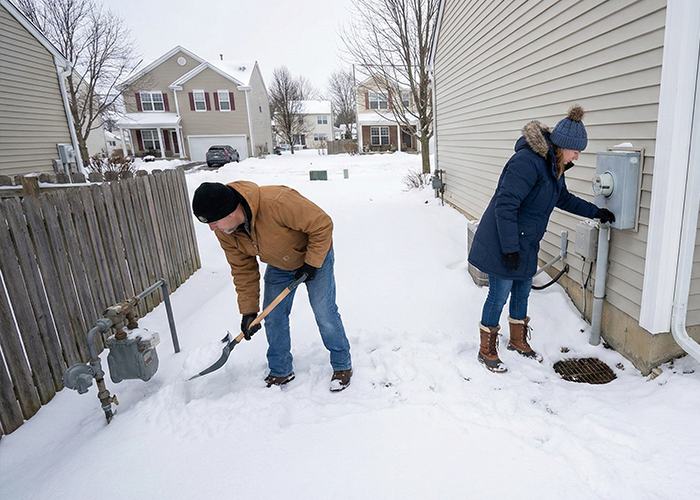
Heavy snow creates extra stress on exterior plumbing parts. Backflow preventers on irrigation lines sit above grade and cool quickly. Foam insulation covers and short heat-trace sections, installed by a qualified technician, keep those parts safer during a deep freeze.
Meter boxes and curb stops can become buried under snow berms. Clear access helps in an emergency. Downspout extensions, sump discharge lines, and area drains freeze in shaded spots, which can push water back toward the foundation. A short re-route with a gentle slope keeps discharge lines open.
These snow plumbing concerns grow during a thaw, since meltwater refreezes at night. A daily check of exterior discharge points helps avoid sudden blockages.
Condo and Townhome Realities During Cold Snaps
Shared walls and risers change the playbook. A unit that sits empty over a long weekend can chill a shared chase. Communication between neighbors helps, because a drip on the top floor keeps movement in the vertical line below.
HOA guidelines may require approved faucet covers, specific insulation types, or scheduled shutoffs for hose bibs. A quick review of the community standard helps residents follow the same plan. Building staff should have access to main valves and common-area mechanical rooms in case of a line freeze.
Smart Add-Ons That Pay Off in Winter
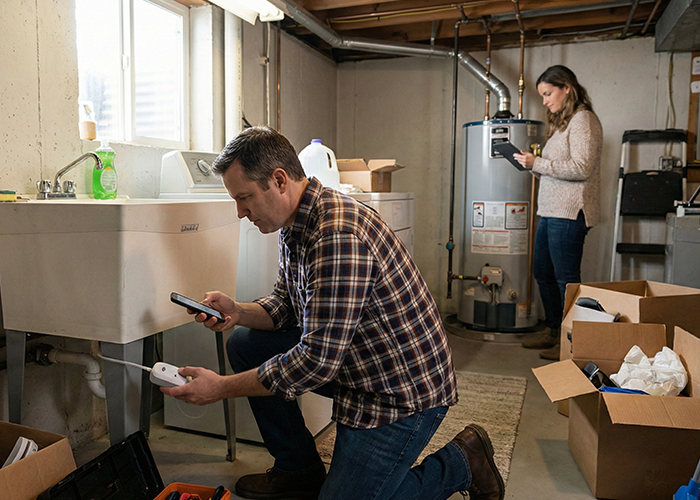
Modern leak detectors and shutoff valves provide useful backup during a cold front. Sensors placed under sinks, near water heaters, and behind washing machines send alerts before flooring gets damaged. A motorized main shutoff can stop a leak automatically when paired with whole-home sensors.
Heat cable, when installed correctly, adds protection to vulnerable runs in crawlspaces and garages. A thermostat-controlled cable turns on at a set temperature, which saves energy and provides consistent warmth along the pipe.
Seasonal Habits that Reduce Risk
A little routine goes a long way. Residents who travel should take precautions to avoid winter plumbing issues. The home’s main valve should be easy to reach, and a neighbor should know where it is.
- Kitchen and bath cabinets along exterior walls stay warmer when doors are cracked open during a freeze
- Outdoor hoses should be disconnected, and frost-free hose bibs should still get covers for extra protection
- Irrigation systems do best when drained and winterized according to the manufacturer’s guide
Laundry rooms over unheated garages benefit from pipe insulation and a small space heater used safely with proper clearance. Garage doors should stay closed during cold snaps to keep warm air inside the house envelope.
Sewer Backups and Septic Systems in Cold Conditions
Low fixture use during travel can allow ice to form in shallow sections of sewer laterals. If a home shows repeated slowdowns during cold weeks, camera work may reveal low pitch or pooling. An early repair prevents a mid-winter backup.
Septic systems need special care. Access lids should remain visible and clear of snow berms for service. Vehicles should not park over the field, since soil compaction worsens cold-weather performance. Warm indoor water use spread throughout the day helps maintain the temperature in the tank and lines.
Relying on Professionals
Some situations deserve immediate help. A frozen main, a swelling ceiling, the sound of running water behind a wall, or a sewer smell that worsens despite vent checks all signal a need for a licensed plumber. Electrical risks come with wet areas, so power to nearby outlets may need to be cut before work begins.
A professional can isolate zones, add temporary heat safely, and repair fittings without compounding damage. Documentation matters, so clear photos and a short incident log help with warranties and any insurance conversations.
Quick Winter Plumbing Checklist Residents can Keep
A short list near the main valve saves time during a freeze. It also helps family members act fast if a line bursts.
- Know where the main shutoff is, and keep a wrench there
- Keep foam covers on hose bibs, and disconnect all hoses
- Insulate exposed pipes in garages, crawlspaces, and exterior wall cavities
- Set the thermostat to avoid deep setbacks during a cold front
- Open vanity and sink bases on exterior walls during hard freezes
- Let far-run faucets drip slowly during extreme cold
- Keep a hair dryer or heating pad ready for safe thawing, never an open flame
Planning Properly
A steady plan prevents most winter plumbing issues. With a few habit changes and simple upgrades, cold snaps become easier to ride out.
Maintenance Specialists Inc. offers a wide range of commercial property maintenance services. Call us now at 704.405.6000 or contact us online for more details!
Related Articles: