

Homeowners associations have a lot on their plates when it comes to community maintenance. From landscaping and building upkeep to safety inspections and vendor coordination, responsibilities change as the seasons do. Without a clear plan, important maintenance items can easily fall through the cracks.
Why Seasonal Planning Matters
An HOA seasonal checklist serves as a roadmap for community maintenance throughout the year. Instead of addressing problems only when residents report them, associations can identify and resolve issues before they become expensive emergencies.
Seasonal planning also helps boards budget more effectively. When maintenance activities are scheduled in advance, it becomes easier to allocate funds, coordinate vendors, and avoid unexpected expenses. This approach creates consistency while helping communities maintain their appearance and functionality year-round.
Many maintenance concerns are tied directly to weather patterns. Heavy rain, freezing temperatures, summer heat, and falling leaves all impact community assets differently. A seasonal checklist ensures that each challenge receives attention at the appropriate time.
Spring Maintenance Priorities

Spring marks the beginning of the busiest maintenance season for many HOAs. Winter weather often leaves behind damage that must be addressed before temperatures rise.
The first priority should be a comprehensive property inspection. Walk through common areas, buildings, sidewalks, parking lots, and recreational facilities to identify any signs of deterioration. Small cracks, drainage problems, or damaged landscaping may seem minor now, but they can worsen quickly if left untreated.
Landscaping also demands attention during spring. Grass begins growing rapidly, flower beds need refreshing, and trees may require pruning. Seasonal plantings can improve curb appeal and create a welcoming atmosphere for residents returning outdoors.
Spring maintenance often includes:
- Inspecting roofs for winter damage
- Cleaning gutters and downspouts
- Repairing sidewalks and pathways
- Refreshing mulch and landscape beds
- Testing irrigation systems
- Inspecting drainage systems
- Scheduling tree trimming where needed
Pool facilities should also receive special attention. Before opening community pools, boards should ensure equipment functions properly, water quality standards are met, and all safety features remain compliant with local regulations.
Summer Maintenance and Community Upkeep
Summer brings increased community activity. Residents spend more time outdoors, amenities receive heavier use, and landscaping demands become more intensive.
One of the most visible aspects of summer maintenance is lawn care. Grass grows quickly during warm months, requiring consistent mowing, edging, fertilization, and irrigation. A neglected landscape can negatively affect the appearance of the entire community.
Amenity inspections should become more frequent during this season. Pools, playgrounds, fitness centers, clubhouses, and sports courts often experience their highest usage levels in summer. Regular inspections help identify safety concerns before they impact residents.
Common summer maintenance tasks include:
- Monitoring irrigation performance
- Inspecting playground equipment
- Maintaining pool equipment
- Pressure washing common areas
- Checking outdoor lighting
- Evaluating pest control measures
- Monitoring tree health during heat stress
Summer is also a good time to review building exteriors. Sun exposure, humidity, and storms can cause gradual wear on siding, paint, and roofing materials. Early detection allows repairs to be completed before seasonal weather changes create larger problems.
Storm preparedness should remain a priority throughout the summer. Depending on the region, severe thunderstorms, hurricanes, or extreme heat events may require additional preventive measures.
Fall Maintenance and Winter Preparation
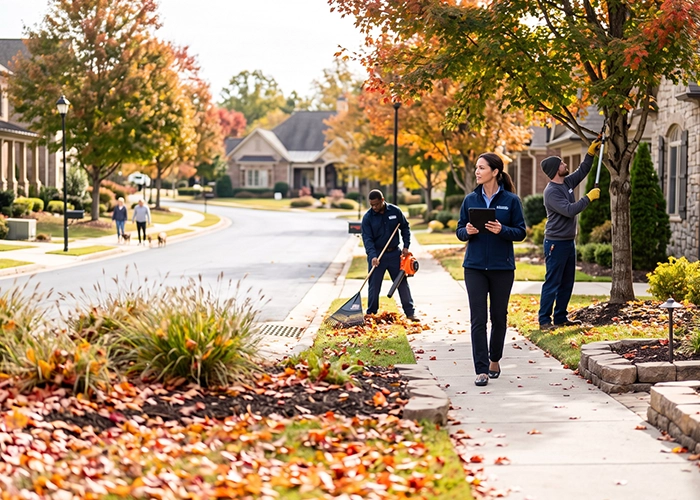
Fall provides an opportunity to prepare the community for colder weather ahead. Many maintenance professionals consider this one of the most important seasons for preventive maintenance.
Leaf accumulation can create drainage problems and safety hazards if not addressed promptly. Regular cleanup helps prevent clogged storm drains, slippery walkways, and lawn damage.
Fall is also the ideal time to inspect roofing systems, building exteriors, and weatherproofing measures. Identifying vulnerabilities before winter arrives helps reduce the risk of emergency repairs.
Important fall maintenance activities include:
- Clearing leaves from common areas
- Cleaning gutters and drainage systems
- Inspecting roofs and flashing
- Sealing cracks in pavement
- Testing exterior lighting
- Servicing HVAC systems
- Trimming trees near buildings and power lines
Landscape preparation should not be overlooked. Certain plants benefit from seasonal pruning, while others require protection before temperatures drop. Proper care during fall helps ensure healthier growth the following spring.
Fall is also an excellent time to evaluate reserve projects planned for the upcoming year. Boards can review maintenance records, assess aging infrastructure, and prioritize future improvements before budget season begins.
Winter Maintenance Considerations
Winter maintenance varies significantly depending on geographic location. Even communities in milder climates face unique seasonal challenges.
For regions that experience snow and ice, prompt removal is critical for resident safety. Walkways, entrances, parking lots, and roadways should remain accessible and free from hazardous conditions. Vendor contracts should clearly define snow removal expectations before winter weather arrives.
Building systems require additional monitoring during colder months. Freezing temperatures can impact plumbing, roofing, and HVAC equipment. Regular inspections help reduce the likelihood of service disruptions.
Winter maintenance often includes:
- Snow and ice management
- Monitoring heating systems
- Inspecting pipes for freeze risks
- Maintaining emergency access routes
- Checking roof conditions after storms
- Monitoring indoor air quality
- Reviewing emergency preparedness plans
Winter can also be an ideal time for administrative planning. While outdoor projects may slow down, boards can focus on budgeting, reserve studies, vendor evaluations, and strategic planning for the year ahead.
Common Areas That Need Attention Year-Round

While seasonal maintenance is important, certain community assets require ongoing monitoring regardless of the time of year.
Parking lots and roadways should receive regular inspections. Cracks, potholes, and drainage issues can worsen quickly when ignored. Routine maintenance helps extend pavement life and improve safety.
Exterior lighting is another year-round priority. Proper illumination enhances security, improves visibility, and contributes to resident satisfaction. Burned-out fixtures should be addressed promptly.
Other areas requiring continuous attention include:
- Clubhouses
- Fitness centers
- Security systems
- Entry gates
- Mailbox areas
- Signage
- Fire safety equipment
Routine inspections help ensure these assets remain functional and presentable throughout the year.
Vendor Coordination and Seasonal Maintenance
Even the best HOA seasonal checklist requires reliable vendor support. Maintenance providers play a critical role in helping communities execute seasonal tasks efficiently and consistently.
Strong vendor relationships begin with clear communication. Expectations should be documented in service agreements, including performance standards, response times, and maintenance schedules. This clarity reduces misunderstandings and improves accountability.
Boards should also conduct periodic vendor reviews. Evaluating service quality, responsiveness, and overall value helps determine whether providers continue meeting community needs.
When planning seasonal maintenance, it is often beneficial to schedule services well in advance. High-demand vendors frequently book their calendars months ahead, especially during spring and fall.
Creating a Preventive Maintenance Calendar

A seasonal checklist becomes even more effective when paired with a preventive maintenance calendar. This tool helps boards organize recurring tasks and track completion throughout the year.
The calendar should include routine inspections, major maintenance projects, vendor service dates, and regulatory requirements. Digital tracking systems can simplify recordkeeping and improve transparency.
A successful preventive maintenance calendar often includes:
- Monthly inspections
- Quarterly maintenance reviews
- Seasonal service schedules
- Annual safety inspections
- Reserve project timelines
- Vendor performance evaluations
- Budget planning milestones
Consistency is the key to success. When maintenance becomes part of an organized annual strategy, communities experience fewer emergencies and lower long-term repair costs.
How Professional Maintenance Support Helps HOAs
Many HOA boards consist of volunteer members who balance community responsibilities alongside careers and personal commitments. Managing a comprehensive seasonal maintenance program can quickly become overwhelming.
Professional maintenance partners provide valuable expertise, resources, and coordination support. They help identify potential issues, recommend solutions, and ensure maintenance tasks are completed on schedule.
A trusted maintenance company can also improve vendor management, streamline communication, and help boards make informed decisions about repairs and capital improvements. This support allows board members to focus on governance while ensuring community assets receive proper care.
Keeping Your Community Ready for Every Season
By planning ahead and addressing seasonal maintenance needs proactively, HOA boards can keep their communities safe, attractive, and well-maintained throughout the year. With the right strategy and dependable maintenance support, every season becomes easier to manage.
Seasonal maintenance doesn’t have to be overwhelming. Maintenance Specialists Inc. helps HOA boards stay proactive with inspections, repairs, and ongoing property upkeep. Call us at 704-405-6000 or contact us online to discover how we can help keep your community looking its best all year round.
Related Articles:
- HOA Maintenance Coordination: How to Schedule Upkeep Community Events
- 11 Benefits Of Using Predictive Maintenance Software For Facility Maintenance
- How to Reduce Maintenance Backlogs