

Spring is the perfect time to evaluate how a building performed during the colder months. A well-planned Spring Facility Maintenance Checklist helps facility managers address seasonal wear, improve system performance, and prevent minor issues from turning into expensive repairs.
As temperatures rise, inspections and maintenance tasks can restore efficiency, improve safety, and keep operations running smoothly for the rest of the year.
Spring Facility Maintenance Checklist for Commercial Buildings
A thorough Spring Facility Maintenance Checklist allows facility teams to identify damage caused by winter weather and prepare systems for warmer temperatures. Snow, ice, moisture, and fluctuating temperatures often place heavy strain on building components.
Spring maintenance focuses on inspection, cleaning, and preventative repairs. Addressing these areas early reduces downtime, extends equipment life, and protects property value.
Many facilities schedule these inspections during early spring so repairs can be completed before summer heat places additional demand on building systems.
Inspect and Repair Roofing Systems
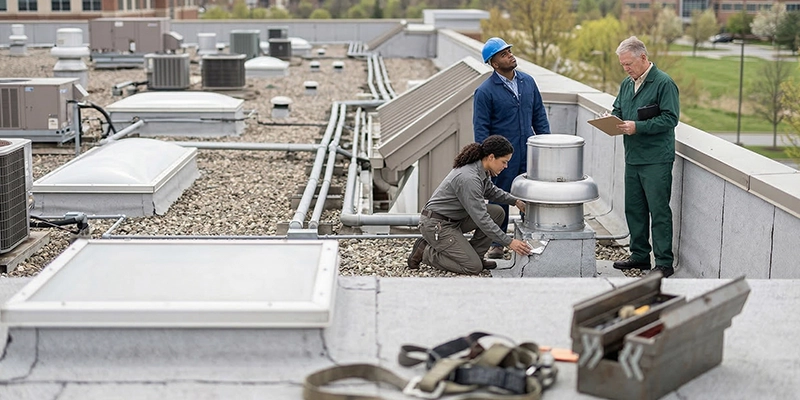
Winter weather can be especially hard on roofing materials. Snow accumulation, ice dams, and freezing temperatures may weaken seals, flashing, and drainage systems.
A roof inspection during spring helps identify small problems before they grow into major leaks.
Common areas that require attention include:
- Check for damaged or missing roofing materials such as shingles or membrane sections.
- Inspect flashing and seals around vents, skylights, and HVAC units.
- Clear roof drains and gutters to prevent standing water.
- Look for signs of ponding water or sagging sections.
Roof maintenance protects the interior of the building and prevents structural issues. Even small leaks can damage insulation, ceilings, and electrical systems if left unaddressed.
Service HVAC Systems Before Summer Demand
Spring is an ideal time to inspect heating and cooling equipment. HVAC systems often work hard during winter, and they will soon face increased cooling demand.
Routine service ensures equipment runs efficiently and reduces the risk of breakdowns during peak usage.
Key HVAC maintenance tasks include:
- Replace or clean air filters to maintain airflow and indoor air quality.
- Inspect condenser and evaporator coils for dirt or debris buildup.
- Test thermostat controls to ensure accurate temperature regulation.
- Check refrigerant levels and inspect lines for leaks or damage.
Proper HVAC maintenance helps reduce energy consumption and improves comfort for building occupants. Clean and efficient systems also extend equipment lifespan.
Examine Exterior Building Components

Exterior surfaces often experience wear during winter months. Moisture, freezing temperatures, and wind can affect siding, brick, paint, and structural components.
A spring inspection helps restore the building’s appearance while preventing long-term deterioration.
Facility teams should pay attention to:
- Cracks in walls or masonry that could allow moisture intrusion.
- Peeling paint or damaged siding caused by weather exposure.
- Loose railings, staircases, or entry structures.
- Parking lot damage such as potholes or surface cracks.
Addressing these issues early helps maintain a professional appearance while protecting structural integrity.
Inspect Windows, Doors, and Seals
Windows and doors play a critical role in energy efficiency and occupant comfort. Cold weather may cause seals to shrink or crack, allowing air and moisture to enter the building.
Spring maintenance focuses on restoring proper insulation and preventing air leaks.
Common inspection steps include:
- Check weatherstripping for wear or damage.
- Inspect caulking around windows and door frames.
- Ensure doors close properly and latch securely.
- Clean glass surfaces and window tracks.
Proper sealing improves temperature control and reduces energy costs throughout the warmer months.
Clean and Maintain Drainage Systems
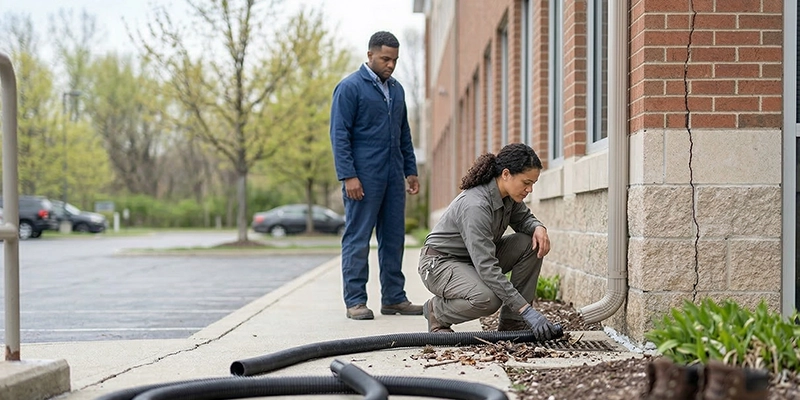
Melting snow and seasonal rain can overwhelm poorly maintained drainage systems. Blocked gutters and drains increase the risk of water damage around the building foundation.
Spring maintenance should focus on restoring proper water flow.
Important drainage tasks include:
- Remove debris from gutters and downspouts.
- Inspect drainage systems around the building perimeter.
- Ensure roof drains are clear and functioning.
- Check that water is directed away from the foundation.
Efficient drainage helps prevent flooding, soil erosion, and foundation damage.
Prepare Landscaping and Exterior Grounds
Outdoor spaces often need attention after winter weather. Landscaping maintenance improves curb appeal while preventing hazards around the property.
Grounds maintenance tasks typically include:
- Prune damaged tree branches that could fall during storms.
- Remove debris from walkways and landscaped areas.
- Repair damaged irrigation lines or sprinkler heads.
- Inspect walkways and curbs for cracks or uneven surfaces.
Well-maintained landscaping creates a safer environment and improves the appearance of the facility.
Inspect Lighting and Electrical Systems
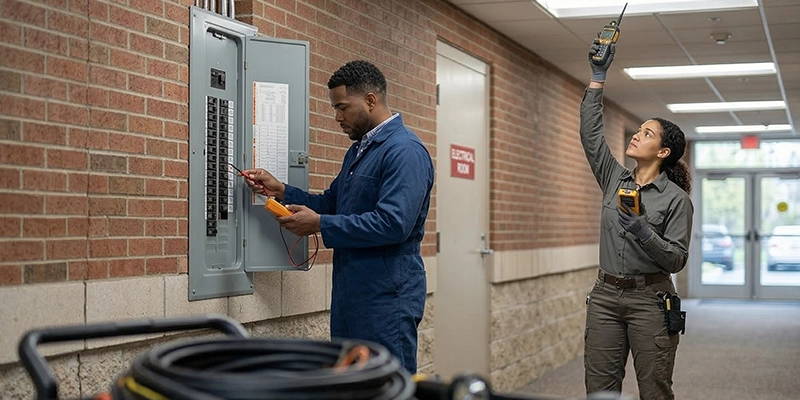
Lighting systems should be inspected regularly to maintain safety and security. Winter conditions may damage outdoor fixtures or electrical connections.
Spring inspections should include both interior and exterior lighting systems.
Maintenance tasks often include:
- Replace burned-out bulbs or fixtures.
- Inspect wiring and electrical panels for signs of wear.
- Test emergency lighting and exit signs.
- Ensure outdoor security lighting is functioning properly.
Reliable lighting improves visibility for employees and visitors while supporting workplace safety.
Review Safety Equipment and Emergency Systems
Facility safety systems require regular testing to ensure compliance and readiness. Spring provides a good opportunity to review emergency equipment and procedures.
Safety inspections may include:
- Testing fire alarms and smoke detectors.
- Inspecting fire extinguishers and verifying inspection dates.
- Reviewing emergency exit pathways.
- Checking sprinkler systems and water pressure.
These systems protect both occupants and property, making regular inspection essential for any facility.
Evaluate Indoor Air Quality

Indoor air quality often becomes a concern during seasonal transitions. Dust accumulation, poor ventilation, and HVAC issues can affect comfort and health.
Spring maintenance can improve air quality by focusing on ventilation and cleanliness.
Steps that help improve indoor air quality include:
- Cleaning air vents and ductwork.
- Replacing air filters throughout the building.
- Checking ventilation systems for proper airflow.
- Inspecting for moisture or mold in damp areas.
Clean air supports productivity and creates a healthier workplace environment.
Plan Preventive Maintenance for the Year Ahead
Spring maintenance is also a good time to review long-term maintenance plans. Facilities that follow a structured maintenance schedule often experience fewer unexpected repairs.
Creating a yearly maintenance plan allows facility managers to track inspections, schedule service calls, and maintain compliance with safety regulations.
Preventive maintenance reduces operational disruptions while helping control repair costs.
Preparing Your Facility for a Productive Season
Spring maintenance sets the tone for the months ahead. By following a detailed Maintenance Checklist, facility managers can improve efficiency, maintain safety, and protect building systems.
A proactive approach keeps buildings operating reliably while ensuring occupants enjoy a clean, safe, and comfortable environment.
Call us at 704-405-6000 or Contact us online to ensure every system in your building receives the attention it deserves.
Related Articles