
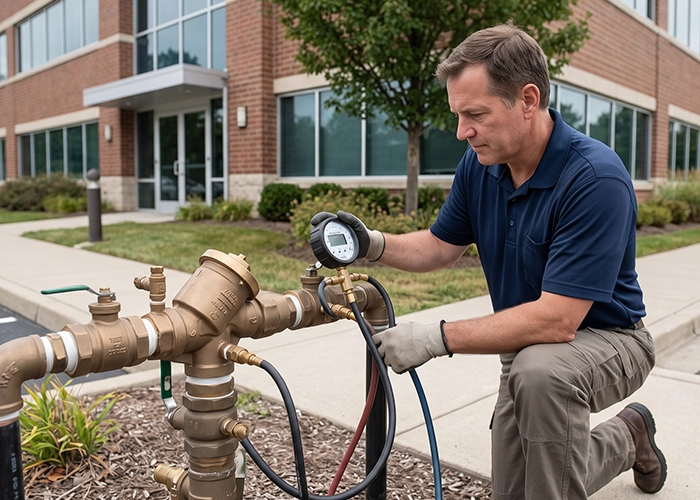
Clean water should flow in only one direction. When pressure changes cause water to reverse course, contaminants can enter a building’s plumbing or the public water supply.
What Backflow Testing Requirements Mean for Your Property
Understanding local backflow testing requirements helps commercial property owners prevent that risk and remain compliant.
Backflow testing requirements are rules that govern the inspection and testing of backflow prevention assemblies. These devices protect drinking water by stopping water from moving backward through a plumbing system.
Commercial properties often have more complex plumbing than homes. Fire sprinkler systems, irrigation lines, boilers, pools, medical equipment, and industrial processes can all create cross-connections. A cross-connection is any point where drinking water could come into contact with a non-potable source.
Testing confirms that the valves inside an assembly open, close, and hold pressure as intended. A device may look fine from the outside but still fail when pressure changes. That is why a visual check alone is usually not enough.
What Causes Backflow in Commercial Plumbing?
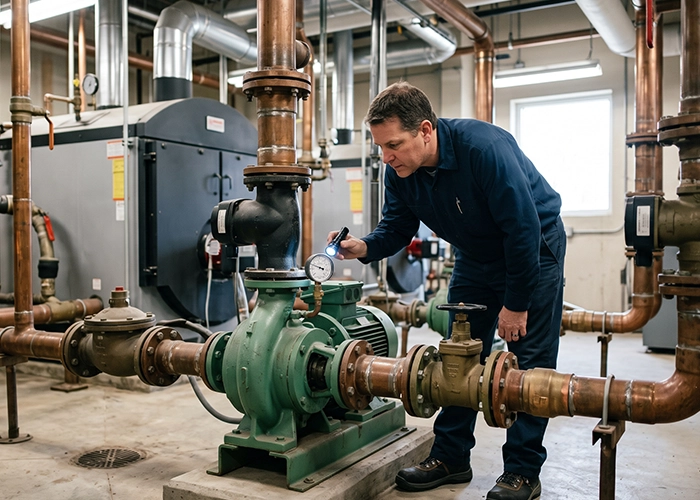
Backflow typically occurs through backpressure or backsiphonage. While the two conditions have different causes, either one can allow unsafe water to move toward a clean supply.
Backpressure occurs when pressure inside the property becomes greater than the pressure in the public water main. Boilers, pumps, elevated tanks, and some industrial equipment can create this condition.
Backsiphonage happens when the public water supply loses pressure. A water main break, firefighting activity, or heavy demand may cause a sudden pressure drop. That drop can pull water from a commercial plumbing system into the public line.
The water drawn backward may contain:
- Cleaning chemicals
- Fertilizers and pesticides
- Boiler treatment products
- Bacteria or waste
- Oils and industrial fluids
- Medical or laboratory substances
- Stagnant water from fire protection systems
Without a working backflow preventer, a pressure event can put building occupants and nearby water customers at risk.
Why Commercial Properties Face Greater Backflow Risks
A typical office may have irrigation and fire protection lines in addition to its domestic plumbing. A restaurant may have beverage machines, dishwashing equipment, and chemical dispensers. Healthcare, manufacturing, and automotive facilities often have even more cross-connections.
These systems do not all present the same level of danger. Water authorities classify connections based on the substance that could enter the drinking water. A connection involving a minor change in water quality presents a different risk than one involving a toxic chemical.
Commercial properties commonly subject to backflow controls include:
- Restaurants and commercial kitchens
- Medical, dental, and veterinary offices
- Apartment and condominium communities
- Hotels and hospitality properties
- Schools and childcare facilities
- Manufacturing and industrial buildings
- Car washes and automotive shops
- Properties with pools or irrigation systems
- Buildings with fire sprinkler systems
- Facilities with boilers or chemical-fed equipment
The water provider or local authority determines which protection is required. The decision may depend on the property’s use, plumbing layout, equipment, and degree of hazard.
Backflow Testing Requirements in North Carolina

North Carolina requirements come from state law, plumbing and fire codes, and local cross-connection control programs. As a result, the exact rule for a commercial property can vary by water provider and municipality.
North Carolina law allows backflow preventers to be required when state or federal law calls for them or when the connection presents a high hazard. Plumbing work, facility additions, and changes in property use may also trigger installation requirements under applicable codes.
A high-hazard connection involves a substance that could cause illness, death, or disease if it entered the drinking water. Commercial operations with chemicals, medical processes, waste, or other harmful materials may fall into this group.
Local water providers manage much of the testing process. They may set due dates, approve testers, receive reports, and issue notices when a test becomes overdue. Property owners should therefore confirm the rules with the water utility serving each site.
Commercial Requirements in Charlotte
Charlotte Water provides a useful example of how a local North Carolina program works. It requires industrial and commercial customers to install and maintain approved backflow prevention assemblies at every water service connection.
The requirement can apply to:
- Domestic water services
- Irrigation services
- Fire lines
- Swimming pool meters
A Charlotte Water-approved and certified tester must test an assembly when it is installed and once each year afterward. New installations also require plan review and field approval. Test reports for newly installed assemblies must be submitted according to Charlotte Water’s procedures.
Other North Carolina utilities may have different forms, portals, deadlines, or approved tester lists. For example, Durham requires its testable backflow assemblies to be tested annually and uses a third-party platform to collect test reports.
What North Carolina Owners Should Verify
Commercial property owners should contact their local water provider and confirm:
- Which assemblies are registered to the property
- The due date for each assembly
- Whether annual testing is required
- Which tester certifications the utility accepts
- How the report must be submitted
- Whether the utility charges a filing fee
- What happens if an assembly fails
- Whether repairs require another test
Do not assume that a previous owner, tenant, or plumbing company filed the last report. Ask the utility to confirm that its records are current.
Backflow Testing Requirements in South Carolina
South Carolina’s cross-connection control program is administered by the Department of Environmental Services. Public water systems must maintain programs that identify and control unprotected cross-connections.
Water systems must keep records showing the location, type, and size of existing backflow prevention assemblies. Their records must also include annual testing results.
Testing must be completed by a South Carolina-certified backflow prevention tester. Assemblies used within the state must appear on the South Carolina Department of Environmental Services’ approved list.
The South Carolina Plumbing Code calls for annual inspections of backflow prevention assemblies and air gaps. Several testable assemblies must be tested when they are installed, directly after repair or relocation, and at least once per year.
These include:
- Reduced pressure principle assemblies
- Double check valve assemblies
- Pressure vacuum breakers
- Spill-resistant vacuum breakers
- Detector assemblies used for fire protection
- Certain hose connection backflow preventers
The public water provider may have additional procedures for registration, reminders, and report submission. Owners should check both state standards and the requirements of their local utility.
How Commercial Backflow Testing Works

A backflow test measures the performance of the assembly’s internal components. The tester uses calibrated equipment to check valve operation, pressure differences, and relief valve performance when applicable.
The basic appointment usually follows this process:
- The tester identifies the assembly. The device’s location, size, type, manufacturer, model, and serial number are checked.
- The water service is isolated. Shutoff valves are closed so the tester can evaluate the assembly. Water may be unavailable in part or all of the building during this period.
- Test equipment is connected. A differential pressure gauge is attached to the assembly’s test cocks.
- Each component is tested. The tester follows the procedure required for that type of device.
- Results are recorded. Passing values, failed components, repairs, and final results are documented.
- The report is submitted. Depending on local rules, the tester or property owner sends the result to the water provider.
Testing often takes a short time when the device is easy to reach and passes on the first attempt. Large sites with several assemblies will require more planning.
What Happens When a Device Fails?
A failed test does not always mean that the entire assembly must be replaced. Dirt, worn seals, damaged springs, and aging rubber parts can keep a valve from closing properly. Some devices can be cleaned or repaired and then tested again.
Replacement may be the better choice when parts are unavailable, the body is damaged, or the device no longer meets local standards. The new assembly must be approved for use and correctly sized for the system.
A failed assembly should not be ignored. The local water provider may require prompt repair and a passing retest. If the problem remains unresolved, the provider may issue penalties or interrupt water service to protect the public supply.
Ask the tester to explain the failure, available repairs, and expected service life. This helps management choose a sound option instead of making a rushed decision.
How to Prepare for a Backflow Test
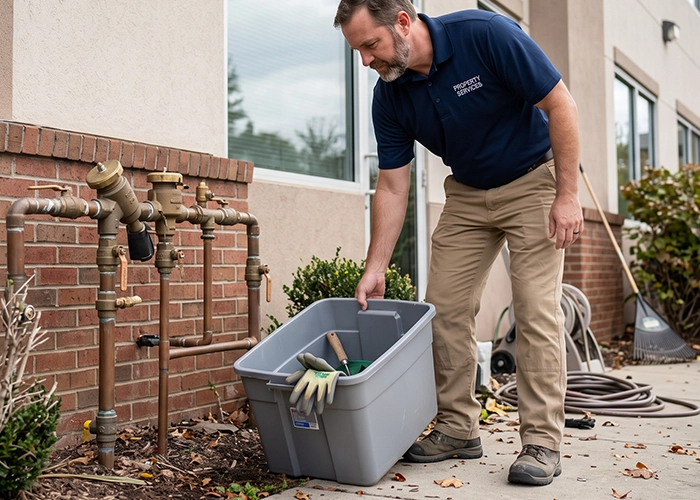
Good preparation can reduce delays and limit disruption. Begin by locating every assembly and checking whether the test area is safe and accessible.
Remove stored items, weeds, standing water, or other obstructions around the device. If the assembly is in a locked room, fenced yard, ceiling space, or mechanical area, arrange access before the tester arrives.
Property managers should also:
- Notify tenants or staff about a possible water interruption
- Avoid scheduling testing during peak business hours
- Gather previous reports and repair records
- Confirm that the tester holds the required certification
- Provide utility notices, account numbers, and device information
- Identify any fire system procedures that must be followed
- Coordinate with security and facility personnel
- Ask who will submit the final report
Fire line testing may require added coordination. The alarm company, fire department, monitoring provider, or insurance contact may need advance notice before a fire protection system is taken out of service.
Common Compliance Mistakes to Avoid
One common mistake is assuming that a test is complete once the technician leaves. Compliance may not be recorded until the water provider receives and accepts the report.
Another problem occurs when the tester submits incorrect property or device information. A serial number that does not match the utility record may cause the report to be rejected or applied to the wrong assembly.
Owners should also avoid waiting until the due date to schedule service. If a device fails, repairs and a second test will take more time. Booking early leaves room to address the problem without missing the deadline.
Missing devices can create trouble as well. A property may have separate assemblies for domestic water, irrigation, pools, and fire protection. Completing one test does not cover the others.
Benefits Beyond Meeting the Rules
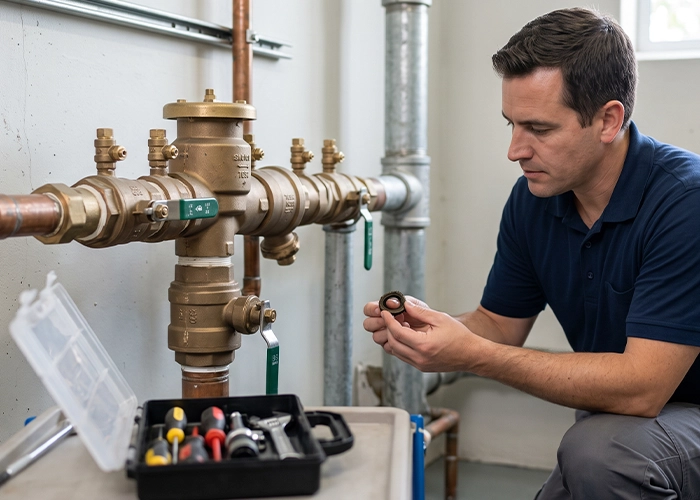
Passing a backflow test does more than satisfy a filing requirement. It confirms that an important water safety control is working.
Routine testing can also reveal early wear before the assembly fails completely. Small repairs can often be handled during a planned visit, which is easier than dealing with an urgent compliance notice or water shutoff.
For owners with several commercial locations, a central testing schedule offers added value. It keeps due dates, reports, repairs, and device records in one place. This makes budgeting easier and reduces the chance that an annual test will be missed.
Choosing a Qualified Backflow Testing Provider
The tester must hold credentials accepted by the state and local water provider. Certification matters because each assembly must be tested through a specific procedure with properly maintained equipment.
Look for a provider that understands commercial systems and local reporting rules. The company should be able to identify each device, explain test results, coordinate repairs, and deliver clear documentation.
Before scheduling service, ask:
- Is the tester approved for this water provider?
- Does the service include report submission?
- Are filing fees included in the price?
- Can failed assemblies be repaired during the visit?
- Will a passing retest be completed after repairs?
- Can the provider manage several devices or locations?
- Will management receive a copy of every report?
Clear answers help prevent surprise charges and unfinished compliance tasks.
Keep Your Property Protected and Compliant
Timely testing protects drinking water, supports compliance, and gives property owners confidence that each assembly will work when pressure changes occur.
Keep your backflow preventers tested, your records current, and your water system protected.
Call 704-405-6000 or contact us online to schedule professional commercial backflow testing.
Related Articles:
- The Most Overlooked Germ Hotspots in Offices and How to Eliminate Them
- Why Does Your Property Need Commercial Backflow Testing?
- Commercial Roof Leaks: Causes, Signs, And Repair