
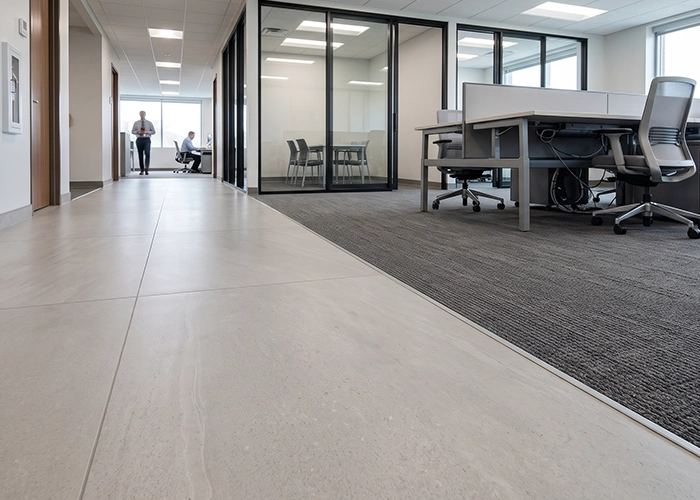
Choosing between tile and carpet affects more than the look of a room. The right floor can make a space easier to clean, more comfortable to use, and better suited to the people who walk through it every day.
Start With the Space’s Purpose
There is no single flooring choice that works for every building. A busy lobby has different needs than a quiet office, and a break room faces different spills and foot traffic than a conference room. Before comparing colors or prices, think about what happens in the space on a typical day.
Tile is often a practical choice for entrances, restrooms, kitchens, and other areas where spills or tracked-in dirt are common. It has a firm surface that is easy to sweep and mop. Carpets can be a better fit for offices, meeting rooms, and other spaces where people value warmth, comfort, and a quieter feel.
It also helps to look at the whole property instead of treating every room the same. One building may benefit from tile near the entrance and carpet in private offices. That mix can match the flooring to each area’s use and make routine care easier to plan.
What Tile Brings to a Busy Property
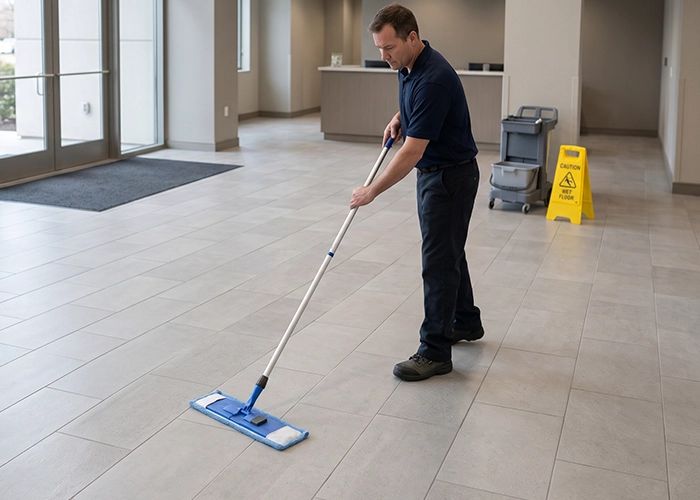
Tile stands up well to routine cleaning and can handle busy areas when the product and installation suit the space. Ceramic and porcelain tile are common options, but tile also includes natural stone and other materials with different care needs. The right choice depends on the room, the expected traffic, and the manufacturer’s guidance.
A smooth, finished tile surface usually makes it easy to remove dust, mud, and spills. That can be helpful near doors and in rooms where food or liquids are present. However, the surface alone does not tell the whole story. Grout lines can collect dirt and may need focused cleaning to keep the floor looking even.
Tile also offers a wide range of colors, patterns, and finishes. It can create a clean, professional look in public areas, and some styles can make a room feel brighter or more open. Texture matters, too. A highly polished surface may look attractive, but a floor’s slip resistance and suitability for the location should be considered during selection.
Where Carpet Can Make a Difference
Carpet brings a softer feel to a room. It can make offices and meeting spaces feel more comfortable, especially where people sit or stand for long periods. It also helps reduce the sound of footsteps, which can make a shared workspace feel calmer.
There are many carpet styles and fiber types, so it is possible to choose a product for a particular level of use. Low-profile commercial carpet may work better in a busy office than a thick, plush style. Product construction, backing, and installation all affect how the carpet performs over time.
Carpet does ask for regular attention. Dust and soil can settle into the fibers, and a spill may leave a mark if it is not treated promptly. Regular vacuuming, quick spot care, and planned deep cleaning help keep carpet in good condition. The cleaning plan should follow the carpet maker’s instructions and account for how much traffic the area receives.
Compare Cleaning and Ongoing Care
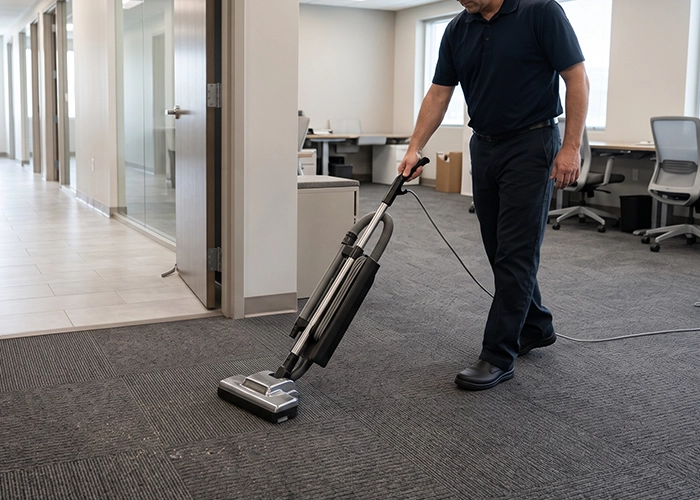
Tile and carpet need different kinds of care. Tile usually benefits from frequent sweeping or dust mopping, followed by damp mopping as needed. The grout may need periodic attention, especially in high-use areas or where dirt and moisture collect.
Carpet needs regular vacuuming, prompt spill response, and deeper cleaning on a schedule that fits the space. Walk-off mats at entrances can reduce the amount of soil tracked inside. A consistent plan also helps staff catch small stains before they become more difficult to remove.
For either flooring type, using the wrong cleaner or method can cause damage or leave residue. Follow the manufacturer’s care instructions, and test unfamiliar products in a small area first. For tile, a cleaner suited to the specific tile and grout is important. For carpet, choose products and equipment designed for carpet fibers.
A basic maintenance plan can include:
- Daily or frequent checks in busy entrances and common areas
- A regular schedule for sweeping, mopping, or vacuuming
- Quick cleanup of spills and tracked-in soil
- Periodic professional cleaning based on traffic and visible wear
- Inspections for loose tiles, damaged grout, carpet seams, or trip hazards
The goal is not simply to clean when the floor looks dirty. Routine care helps protect the surface and gives maintenance teams a chance to spot problems early.
Consider Comfort, Noise, and Safety
People experience a floor every time they walk, sit, or work in a room. Carpet feels softer underfoot and can help reduce noise from footsteps and moving chairs. Those qualities can matter in offices, classrooms, and meeting areas where comfort and concentration are important.
Tile has a firm, stable feel and can be easier to keep clean in areas where moisture is common. But it may feel colder or harder underfoot than carpet. The selected finish, mat placement, and cleaning practices can all affect how safe and comfortable the space feels.
No flooring material is automatically safe in every setting. Spills, loose edges, worn carpet, cracked tile, or uneven transitions can create hazards. Regular inspections help maintenance teams identify and address these conditions before they become bigger problems.
Look Beyond the Purchase Price
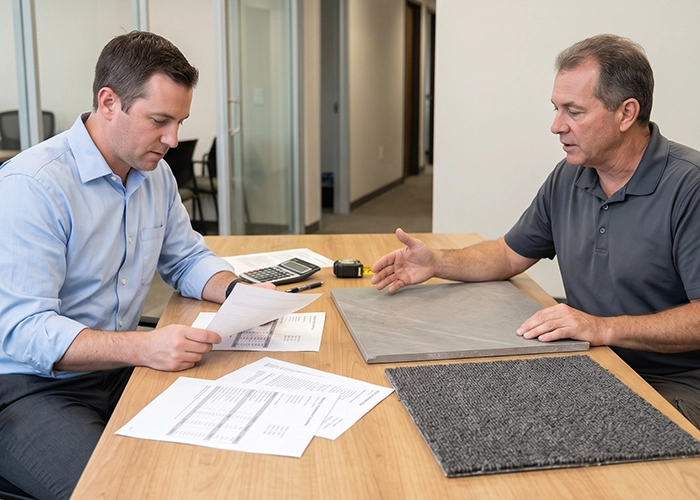
The initial price is only one part of the flooring decision. Installation, preparation, furniture moving, cleaning, repairs, and replacement all contribute to the total cost over time. A lower-cost option may require more frequent care or replacement, while a higher upfront investment may suit a heavily used area better.
The room’s use can change the calculation. In a restroom, kitchen, or entryway, tile may be easier to keep presentable after frequent spills or wet shoes. In a private office, carpet may provide comfort and sound control that matter more than the ease of mopping.
Before making a choice, consider:
- How many people use the room each day
- Whether the area sees moisture, food, or tracked-in dirt
- How often the floor can be cleaned
- How quickly the space needs to be available after cleaning
- The cost of installation and future repairs
- The appearance and comfort expected by occupants
A maintenance specialist can help assess the space, identify existing floor concerns, and build a cleaning plan around the material. That input can help property managers compare options with the building’s daily needs in mind.
Match the Flooring to Each Room
A building does not need to use the same flooring everywhere. Tile in a lobby or break room and carpet in a conference area can provide a useful balance. The transition between materials should be planned so it is secure, easy to maintain, and suitable for the traffic moving through the area.
For example, an entrance may benefit from a durable hard surface paired with walk-off mats. A nearby office might use carpet to soften noise and create a more comfortable place to work. The best mix depends on how people move through the property and what each room needs to support.
It is also useful to consider future maintenance before installation. Ask how the floor should be cleaned, whether grout needs sealing, how carpet stains should be treated, and what repairs may involve. Clear answers make it easier to care for the floor and avoid methods that could shorten its useful life.
Make a Choice That Works Day to Day
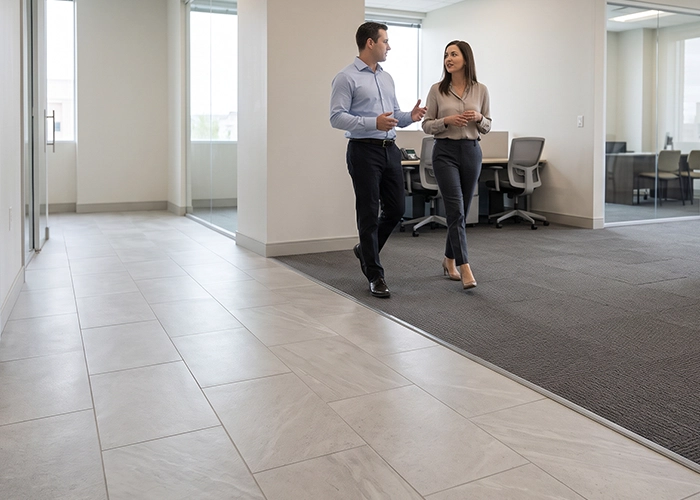
Tile and carpet can both serve a property well when they fit the space and receive proper care.
Tile is often a strong choice where moisture, spills, and easy surface cleaning are top concerns. Carpet can be the better choice where comfort and sound reduction are priorities.
The most reliable decision starts with the room’s everyday demands. With a practical plan in place, your flooring can support a cleaner, more functional property for years to come.
Keep your floors looking their best with the right care and maintenance. Explore Maintenance Specialists services today to find support for your property’s needs.
Related Articles: