

A clean floor helps a business feel cared for before a visitor speaks with anyone. Floor waxing can also help protect certain commercial floors from daily wear, but the right care plan starts with knowing what the surface needs.
Why Floor Waxing Matters
Floors take a steady beating. Customers track in grit, staff move carts and chairs, and spills can leave marks if they sit too long. Over time, that traffic can dull the surface and make an otherwise tidy space look worn.
For floors that are designed to receive finish, a fresh protective layer can help limit scuffs and make routine cleaning easier. It gives dirt and wears a surface layer to affect before they reach the floor itself. A well-kept floor can also make lobbies, hallways, classrooms, and work areas feel brighter and more professional.
Floor care is also part of building safety. Spills, tracked-in water, uneven patches, and residue can create hazards. A floor treatment does not make a surface slip-proof, so staff still need to manage wet areas, use warning signs, and keep walking paths clear.
Floor Waxing Starts With the Right Floor Type

The word “wax” is often used for several kinds of floor finish. Many commercial programs use synthetic floor finish rather than traditional wax. The products may look similar once dry, but they are not all made for the same surfaces.
Vinyl composition tile, or VCT, is a common example of a floor that may use a finish program. Other resilient floors may call for a different approach. Some luxury vinyl tile, solid vinyl, and factory-finished surfaces are made to be cleaned or buffed without added finish. Applying wax to a floor that does not need it may leave buildup, dull the look, or make future care harder.
Before any product is used, identify the floor and check its care instructions. Ask the flooring maker or installer if the material is unclear. A small test spot can help confirm how a cleaner or finish behaves, but it does not replace the manufacturer’s guidance.
A useful rule is simple: do not wax a floor just because it looks dull. First find out whether the surface needs stripping and refinishing, a deep scrub, dry buffing, or only regular cleaning.
Signs Your Floors May Need Professional Attention
A floor may be due for restorative care when routine cleaning no longer brings back a consistent appearance. Look for patterns across the whole area, not just one spot. A traffic lane may wear differently from a corner that sees little use.
Common signs include:
- A cloudy or uneven sheen that remains after cleaning.
- Scuffs and black marks that return quickly.
- Finish buildup near baseboards, corners, or under furniture.
- Worn paths where the protective layer looks thin or patchy.
- Dirt that seems trapped under old finish.
These signs do not always mean the floor needs a full strip. A professional can inspect the surface and recommend the least intensive care that will work. Depending on the material and condition, that might mean a scrub and recoat, buffing, spot repair, or a full strip and refinish.
How a Floor Waxing Service Typically Works
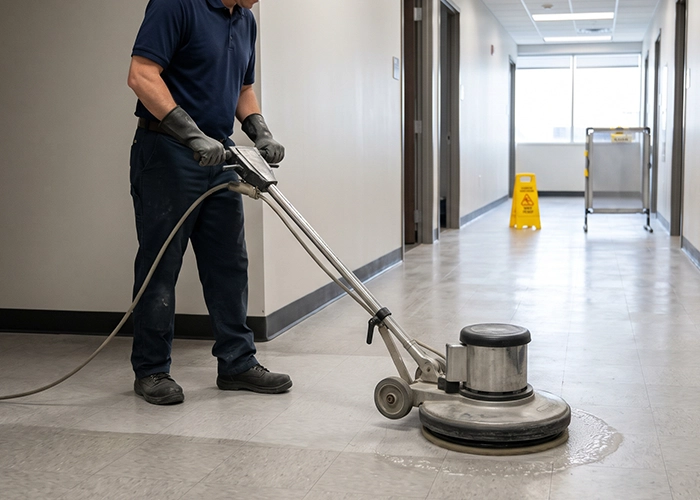
A good service begins with an inspection. The technician checks the flooring type, current finish, problem areas, furniture, nearby carpets, and access to the space. This helps the team choose compatible products and plan work around business hours.
Next, staff move or protect furnishings and remove loose soil. If the old finish is damaged or built up, a compatible stripping product may be used to remove it. The floor is then rinsed and allowed to dry fully. Any leftover chemical or moisture can interfere with the new finish, so preparation matters as much as the final coat.
Once the surface is ready, the technician applies thin, even coats of a floor finish approved for that surface. Each coat needs to dry as directed before another is added. A thick application may take longer to dry and can leave an uneven result, so several light coats are often better than one heavy coat.
Some floors may be buffed or burnished after the finish cures. This step can improve gloss and help maintain the surface, depending on the product and flooring system. The area stays closed until the floor is fully dry and ready for traffic. Drying and cure times vary, so the service team should provide clear instructions before reopening the space.
How Often Should a Business Schedule Floor Waxing?
There is no one schedule that fits every building. A busy school entrance, medical office corridor, and small private office do not get the same amount of traffic. Floor material, finish, cleaning routine, weather, and the type of footwear used in the space all affect how quickly a floor wears.
Start with the floor manufacturer’s recommendations and review the condition of the surface on a regular schedule. A maintenance log can help managers track when areas were cleaned, buffed, or refinished and what results followed. Adjust the plan when high-traffic zones begin to look worn sooner than the rest of the building. Seasonal changes can matter, too: rain, snow, and grit tracked in from outside may call for more frequent entryway cleaning.
A practical program often combines daily and periodic work:
- Daily: Sweep or dust-mop grit and spot-clean spills promptly.
- Weekly: Damp-mop with a product approved for the floor and inspect busy areas.
- As needed: Scrub, buff, or recoat areas when routine cleaning no longer restores the appearance.
- Periodically: Have a qualified floor-care provider assess whether deeper restoration is needed.
These are starting points, not fixed rules. Too much stripping can wear a floor and create extra cost, while too little care can allow dirt and damaged finish to build up. A measured schedule protects the floor and helps avoid unnecessary work.
Daily Care Helps the Finish Last
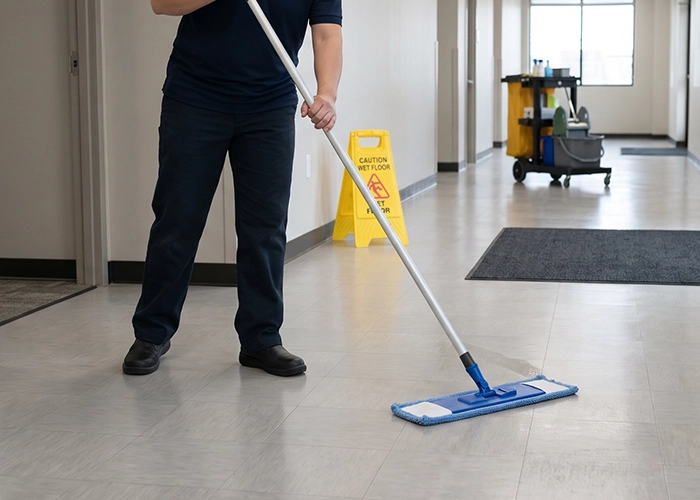
The simplest habits often make the biggest difference. Grit acts like sandpaper under shoes and cart wheels, so use entrance mats and remove tracked-in dirt before it spreads. Place mats where they will not curl or block a doorway, and clean them often so they do not become another source of debris.
Use a neutral cleaner that the flooring maker approves. Follow the label for dilution and application, and avoid mixing products. Too much cleaner can leave residue that attracts soil. For some modern vinyl floors, polish and wax are not recommended at all; a neutral cleaner and damp mop may be enough.
Move chairs and equipment carefully. Use appropriate floor protectors under furniture, and lift heavy items instead of dragging them across the surface. Wipe spills as soon as possible, then make sure the area is dry before people walk through.
Safety During Floor Waxing
Floor care can disrupt a workplace if the area is not planned well. The work zone should be closed off with signs or barriers, and people should have a clear alternate route. Do not let customers or staff walk across a wet floor or step over equipment and cords.
Cleaning and stripping products also require care. Staff should read product labels and safety data sheets, use the protective equipment listed, and provide ventilation as directed. Keep chemicals in their original containers and never mix products unless the manufacturer specifically says to do so.
OSHA requires walking-working surfaces to be maintained in a clean and, as far as feasible, dry condition. That makes timing important. Schedule floor work when foot traffic is low, and reopen the area only when the surface is dry and safe for normal use.
Plan the Work Around Your Business
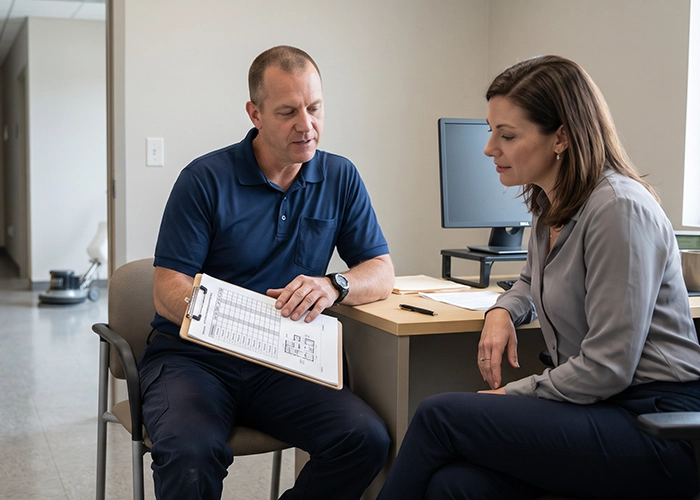
A floor treatment is easier to manage when the schedule is set before the crew arrives. Choose a low-traffic window, such as after closing or during a planned break, and confirm which doors and hallways need to stay open. For a larger property, work can often be divided into zones so employees and visitors still have a safe route through the building.
Before the appointment, decide who will move desks, chairs, displays, and portable equipment. Clear instructions help prevent delays and protect belongings. If items cannot be moved, tell the service team in advance so they can plan around them.
Ask the provider to confirm a few details before work begins:
- Which areas will be treated and which product will be applied?
- How long will each area need to stay closed?
- When can staff move furniture back and resume normal cleaning?
- What should the team do if the floor looks uneven after it dries?
A short plan gives everyone the same expectations. It can also help building managers compare service proposals based on the work included, the materials used, and the time needed to reopen each area.
When Should You Hire a Professional Floor Care Company?
A professional assessment can be helpful when the flooring type is unknown, finish is failing, or previous cleaning has left a cloudy or sticky surface. Commercial teams also have equipment for large spaces and can plan work to limit disruption. They can help determine whether the floor needs a restorative treatment or a less intensive option.
Professional service is especially useful for buildings with long corridors, multiple floor types, public access, or tight operating hours. A provider can coordinate sections so the whole facility does not need to close at once. Ask what products will be used, how long the space must remain closed, and what daily care will help maintain the result.
The goal is not simply a glossy floor. The goal is a clean, even surface that suits the material, holds up to the building’s traffic, and can be maintained safely over time.
A Brighter Floor Starts With a Better Plan
Floor waxing can be a useful part of commercial maintenance when the floor is designed for finish. Identify the surface first, follow its care instructions, and build a routine that matches actual traffic.
Keeping your floors clean and well-maintained starts with the right approach. Whether your facility needs routine maintenance or a more targeted floor care solution, a professional team can help you protect your floors and maintain a clean, professional appearance.
Call us at 704.405.6000 or contact us online today to learn how Maintenance Specialists can help protect your floors, maintain a clean and professional appearance, and keep your facility looking its best.
Related Articles:
- How to Create a Commercial Cleaning Schedule That Works
- How Data Improves Facility Maintenance Decisions
- How to Reduce Maintenance Backlogs