
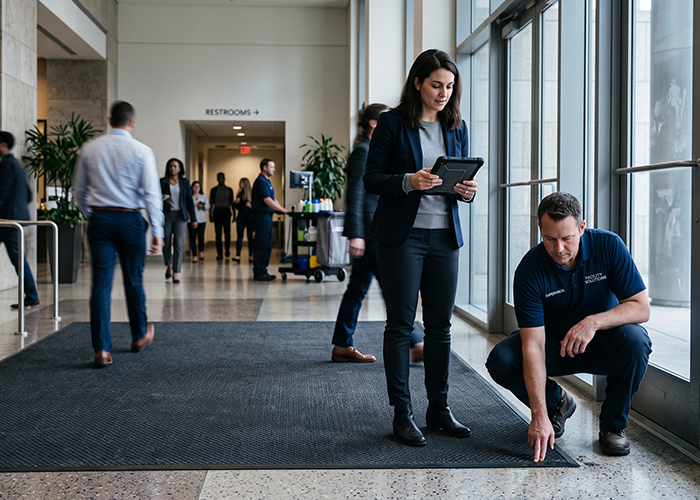
A clean commercial building does not happen by chance. A practical commercial cleaning schedule gives your team a clear plan for keeping each space safe, presentable, and ready for daily use.
What Is a Commercial Cleaning Schedule?
A commercial cleaning schedule is a written plan that lists what must be cleaned, how often it should be cleaned, and who will handle each task. It may cover daily janitorial work, periodic deep cleaning, and seasonal services.
Each building needs its own schedule. A small professional office does not have the same needs as a busy retail store, medical office, warehouse, or school.
The schedule should reflect how the property is used. It should also account for traffic, operating hours, flooring materials, health requirements, and the expectations of employees and visitors.
Why Does Your Facility Need a Cleaning Schedule?
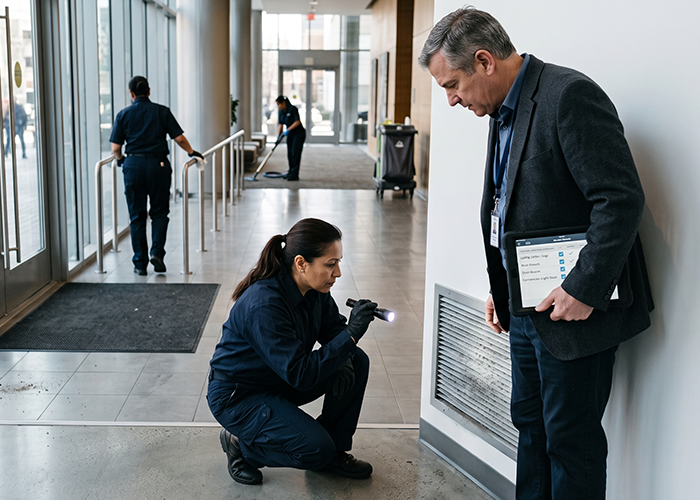
Without a schedule, cleaning often becomes reactive. Staff members address visible messes but may overlook areas that collect dirt slowly or sit outside the normal line of sight.
A clear schedule creates consistency. Everyone knows what needs attention, when the work should happen, and what a finished task should look like.
A strong plan can also provide several business benefits:
- It creates a cleaner and more welcoming workplace.
- It reduces the chance that important tasks will be missed.
- It helps managers track labor, products, and service costs.
- It supports safer conditions for workers and visitors.
- It protects flooring, furniture, fixtures, and equipment.
- It makes service quality easier to inspect.
- It helps cleaning crews use their time more efficiently.
Routine cleaning also removes dirt before it can damage surfaces. Dust can collect in vents, grit can scratch floors, and moisture can harm walls or fixtures if these issues are not addressed.
Start With a Walkthrough of the Property
Before setting a schedule, walk through the entire building. Visit each room, shared area, entrance, utility space, and exterior zone that falls within the cleaning plan.
Avoid making the review from a floor plan alone. A map shows room sizes, but it does not reveal which entrance collects the most mud or which restroom receives the most traffic.
During the walkthrough, note the following:
- The purpose of each space
- The number of people who use it
- The hours when it is occupied
- The types of surfaces in the area
- The amount of daily foot traffic
- Any current cleanliness problems
- Tasks that require special products or equipment
- Areas that must meet added health or safety rules
Speak with employees who use the building each day. They may know about recurring issues that are easy to miss during a short inspection, such as overflowing trash cans or supplies that run out before closing.
Divide the Building Into Cleaning Zones

Breaking a large facility into zones makes the work easier to plan and inspect. It also helps managers assign the right amount of time to each part of the building.
Common cleaning zones include:
- Entrances and lobbies
- Offices and workstations
- Conference rooms
- Break rooms and kitchens
- Restrooms
- Hallways and stairwells
- Elevators
- Storage and supply rooms
- Warehouses or production areas
- Loading docks
- Parking areas
- Outdoor gathering spaces
Some zones will need much more attention than others. For example, a front lobby may require several touch-ups during the day, while a records room may only need light weekly cleaning.
Within each zone, list the fixtures and surfaces that require service. This step turns a broad instruction such as “clean the lobby” into clear tasks that can be completed and checked.
Set Priorities Based on Traffic and Risk
Cleaning frequency should follow actual use. A surface that hundreds of people touch each day needs more attention than one used by only a few employees.
Start by identifying high-touch surfaces. These may include door handles, elevator buttons, railings, shared phones, light switches, counters, touch screens, faucets, and restroom fixtures.
The Centers for Disease Control and Prevention recommends cleaning high-touch surfaces regularly and cleaning other surfaces when they are visibly dirty. In high-traffic spaces, more frequent cleaning or added disinfection may be appropriate.
Restrooms, food preparation areas, and shared equipment also deserve close attention. These spaces can quickly affect how people view the entire building.
A polished conference room will not make up for an unclean restroom. Place your labor where it has the greatest effect on health, safety, and the visitor experience.
Plan Daily Cleaning Tasks

Daily cleaning handles the dirt, waste, and touch points that build up during normal business operations. These tasks form the core of most commercial cleaning schedules.
The exact list will vary, but common daily tasks include:
- Emptying trash and recycling bins
- Replacing liners as needed
- Cleaning and restocking restrooms
- Wiping counters and other shared surfaces
- Cleaning door glass and entry areas
- Sweeping or vacuuming high-traffic floors
- Mopping spills and soiled areas
- Cleaning break room sinks and counters
- Removing food waste
- Disinfecting selected high-touch surfaces
- Checking soap, paper towel, and tissue supplies
- Spot-cleaning walls, doors, and interior glass
Busy buildings may need day porter service in addition to evening cleaning. A day porter can respond to spills, maintain restrooms, collect trash, and keep public areas tidy while the facility is open.
A building with limited traffic may not require constant attention. Even then, entrances, restrooms, waste bins, and shared food areas should be checked every business day.
Add Weekly Cleaning Tasks
Some work does not need to be done each day, but waiting a month would allow dirt to become noticeable. Weekly service fills that gap.
Typical weekly tasks may include:
- Dusting ledges, picture frames, and window sills
- Cleaning office partitions and cubicle panels
- Wiping baseboards in visible areas
- Vacuuming under movable furniture
- Cleaning interior glass and mirrors
- Polishing stainless steel fixtures
- Wiping cabinet fronts
- Cleaning the outside of appliances
- Dusting accessible vents and air returns
- Removing marks from doors and walls
- Cleaning low-traffic rooms
- Checking janitorial closets and supplies
These duties can be divided across several days. Completing every weekly task in one night may place too much pressure on the cleaning crew.
For example, detailed cleaning can be assigned by zone. Offices may receive extra attention on Monday, while conference rooms and common areas are addressed later in the week.
Schedule Monthly and Quarterly Deep Cleaning

Daily service controls surface-level dirt, but it does not replace deep cleaning. Over time, soil settles into carpet fibers, corners, grout lines, vents, and other hard-to-reach places.
Monthly and quarterly work may include:
- Deep cleaning hard floors
- Cleaning carpet spots and traffic lanes
- Dusting high surfaces
- Washing baseboards
- Cleaning behind furniture
- Wiping blinds and shades
- Cleaning light fixtures
- Washing interior windows
- Scrubbing grout and tile
- Cleaning upholstered furniture
- Organizing and sanitizing janitorial closets
- Inspecting cleaning tools and equipment
The timing should depend on the condition of the property. A restaurant may need floor detailing much more often than a small office with light traffic.
Do not wait for carpets or tile to look severely soiled. By that point, dirt may have caused stains, discoloration, or surface wear that routine service cannot correct.
Include Seasonal and Annual Services
Seasonal cleaning prepares the building for changes in weather, traffic, and daily operations. It can also help protect exterior surfaces and areas that receive less attention during the year.
Spring work may focus on windows, pressure washing, carpet cleaning, and removing winter soil. Fall service may include gutter cleaning, entry mat planning, exterior debris removal, and preparing floors for wet weather.
Annual or seasonal work may include:
- Exterior window cleaning
- Pressure washing
- Carpet extraction
- Floor stripping and refinishing
- High-dusting services
- Parking lot sweeping
- Gutter cleaning
- Upholstery cleaning
- Exterior building washing
- Warehouse rafter cleaning
- Lighting and ceiling fixture cleaning
- Cleaning around mechanical equipment
Some services require trained crews, lifts, pressure-washing systems, or commercial floor equipment. Schedule this work early so that it does not interfere with business hours or important events..
Match the Schedule to Your Type of Facility
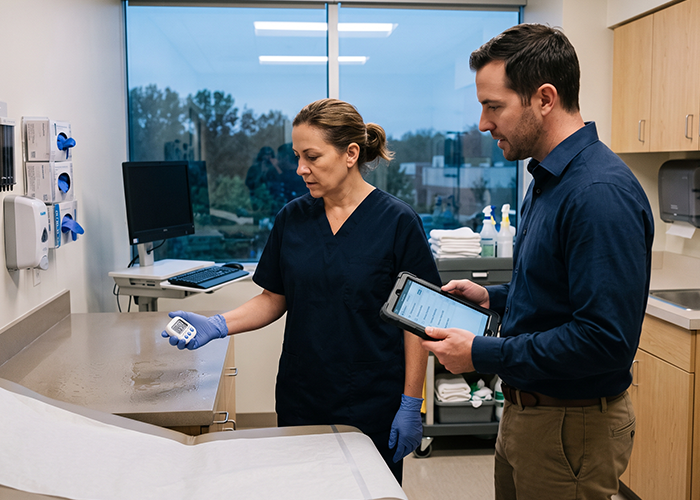
A standard commercial cleaning checklist is a useful starting point, but it should never be treated as a finished plan. Each type of property has different risks and expectations.
Office Buildings
Office cleaning usually centers on restrooms, shared kitchens, desks, conference rooms, and entry areas. Workstation cleaning must also account for personal items and electronic equipment.
High-traffic offices may need daytime restroom checks and trash removal. Lower-traffic offices may be well served by after-hours cleaning several times per week.
Retail Stores
Retail properties must stay presentable throughout business hours. Floors, fitting rooms, checkout counters, glass doors, and customer restrooms often require frequent checks.
Entry conditions can change quickly during rain or snow. Crews should be ready to address water, mud, and debris before they create a poor impression or a slip risk.
Medical and Health Facilities
Medical offices require more detailed cleaning procedures than standard workplaces. Treatment rooms, waiting areas, restrooms, and frequently touched surfaces may have specific cleaning and disinfection needs.
Products and methods must match the facility’s requirements. Staff should also understand contact times, safe handling rules, and any applicable infection-control procedures.
Warehouses and Industrial Properties
Warehouses often deal with dust, packaging waste, tire marks, spills, and debris near loading areas. Cleaning must be coordinated with equipment movement and production activity.
These facilities may also have restricted zones or special safety rules. Cleaning crews should understand site hazards before work begins.
Schools and Child Care Facilities
Schools have heavy traffic and many shared surfaces. Classrooms, restrooms, cafeterias, gyms, and common areas may require different cleaning methods.
Schedules must account for school hours, sports programs, events, and seasonal illness. Products should also be chosen with the age and needs of building occupants in mind.
Know the Difference Between Cleaning and Disinfecting
Cleaning and disinfecting are related, but they are not the same task. Cleaning uses soap, detergent, water, and physical action to remove dirt and many germs from a surface.
Disinfecting uses a chemical product to kill germs that remain. A visibly dirty surface should generally be cleaned before a disinfectant is applied because dirt can reduce the product’s effectiveness.
A schedule should clearly state when each process is required. Routine cleaning is often enough for many low-risk surfaces, while disinfection may be needed in certain high-touch areas or after an illness.
Employees must follow the product label. This includes using the right amount, keeping the surface wet for the required contact time, providing ventilation, and wearing proper protective equipment.
Choose Products That Fit Each Surface
One cleaner should not be used everywhere. A product that works well on restroom tile may damage stone, wood, upholstery, electronics, or a protective floor finish.
Create an approved product list for each surface. This makes purchasing easier and lowers the chance of chemical damage.
The list should include:
- Product name and purpose
- Approved surfaces
- Mixing or dilution instructions
- Required contact time
- Personal protective equipment
- Storage requirements
- Safety Data Sheet location
Facility managers may also consider products with the EPA Safer Choice label. These products must meet the program’s standards for ingredient safety and performance.
Never mix cleaning chemicals unless the manufacturer clearly instructs you to do so. Staff should receive training before handling concentrated products or using new equipment.
Assign Tasks and Define Expectations
A schedule is only useful when responsibility is clear. Every task should have an assigned person, crew, or service provider.
Instructions should be specific enough to prevent confusion. “Clean restroom” is too broad because it does not explain which fixtures, supplies, and surfaces are included.
A stronger restroom assignment might require the cleaner to:
- Empty waste bins.
- Restock soap and paper products.
- Clean toilets, urinals, and sinks.
- Wipe partitions, dispensers, and counters.
- Clean mirrors.
- Disinfect selected high-touch points.
- Sweep and mop the floor.
- Report leaks, damage, or blocked fixtures.
Managers should also define the expected result. A floor may be technically mopped but still have streaks, debris along the edges, or sticky spots.
Decide When Cleaning Should Take Place
Timing affects both cleaning quality and business operations. Some tasks are easier after employees and customers leave, while others must be completed throughout the day.
After-hours cleaning works well for vacuuming, mopping, trash removal, and detailed office service. Daytime service is better for spills, restroom checks, supply restocking, and busy public spaces.
When choosing service times, consider:
- Business hours
- Employee work patterns
- Customer traffic
- Security and access
- Noise from equipment
- Floor drying time
- Scheduled deliveries
- Meetings and special events
Cleaning should support operations, not disrupt them. A good provider can arrange the work around the facility’s busiest and quietest periods.
Use a Written Commercial Cleaning Checklist
A written checklist creates accountability and gives supervisors a consistent way to review completed work. It can be printed, stored digitally, or managed through facility software.
Each entry should include the task, location, frequency, responsible party, and completion status. Space can also be provided for notes about damage, low supplies, or service concerns.
Keep the checklist easy to use. If it is too long or complicated, employees may treat it as paperwork instead of a practical tool.
A basic checklist might include these columns:
- Area
- Cleaning task
- Frequency
- Assigned employee or crew
- Product or equipment required
- Date completed
- Inspection result
- Follow-up notes
Cleaning records can help managers spot patterns. If one restroom regularly needs extra service or a lobby floor requires frequent repairs, the schedule can be adjusted.
Review the Schedule as Conditions Change
A commercial cleaning schedule should change with the building. Staffing, occupancy, tenant use, weather, and operating hours can all affect cleaning needs.
Review the plan at least a few times per year. It should also be checked after a renovation, tenant change, major event, or shift in building use.
Watch for signs that an update is needed:
- Restrooms run out of supplies.
- Trash bins overflow before collection.
- Floors look worn or dirty between services.
- Complaints increase in one area.
- New rooms or equipment have been added.
- Cleaning staff regularly run out of time.
- The same tasks are repeatedly missed.
- Certain spaces no longer receive much use.
Small schedule changes can often solve these problems without a large increase in cost. Moving labor from a low-use area to a busy zone may be all that is needed.
Common Scheduling Mistakes to Avoid
One common mistake is giving every room the same level of service. Cleaning should follow traffic, use, and risk rather than room size alone.
Another mistake is placing too many duties in one shift. Rushed workers may complete visible tasks but skip corners, high surfaces, or detailed work.
Facility managers should also avoid these problems:
- Using vague task descriptions
- Failing to assign responsibility
- Ignoring seasonal cleaning needs
- Choosing products without checking surface compatibility
- Skipping routine inspections
- Forgetting to plan for absences
- Scheduling noisy work during business hours
- Failing to track supply use
- Treating disinfection as a replacement for cleaning
- Waiting for visible damage before deep cleaning
A realistic schedule should leave enough time for safe, careful work. If the workload cannot be completed within the assigned hours, the plan or staffing level must change.
Keep Your Facility Ready for Every Workday
A practical commercial cleaning schedule creates clear standards, protects valuable surfaces, and helps your building make a strong impression.
When the plan reflects real traffic and operating needs, it becomes easier to maintain consistent results.
Maintenance Specialists can help you build a cleaning program around your property, schedule, and budget. Call us at 704-405-6000 or contact our team today to discuss dependable commercial cleaning and facility maintenance services for your business.
Related Articles:
- 11 Causes Of Building Maintenance And Building Deterioration
- Is It Smart To Call For Residential Disinfection Service?
- The Ideal Preventative Maintenance Checklist For Commercial Buildings