

Every commercial facility depends on a clean environment, but cleaning vs. sanitizing vs. disinfecting is a topic that often causes confusion. While these terms are frequently used interchangeably, each process serves a different purpose and plays an important role in maintaining a safe, healthy, and professional workplace.
Understanding the Differences
Understanding when to clean, sanitize, or disinfect helps businesses create better maintenance plans, protect occupants, and comply with industry expectations. Whether you manage an office, healthcare facility, warehouse, school, or retail space, knowing the difference can improve both cleanliness and operational efficiency.
Although these three processes are related, they are not the same. Each one targets different problems and should be used under different circumstances. Choosing the appropriate method depends on the surface, the level of contamination, and the goals of your facility maintenance program.
Many businesses mistakenly assume that disinfecting everything is the best solution. In reality, effective facility maintenance begins with proper cleaning. Without removing dirt and debris first, sanitizers and disinfectants cannot perform as intended.
A successful maintenance program often combines all three methods throughout the day. Instead of replacing one another, they work together to maintain healthier environments.
What Is Cleaning?
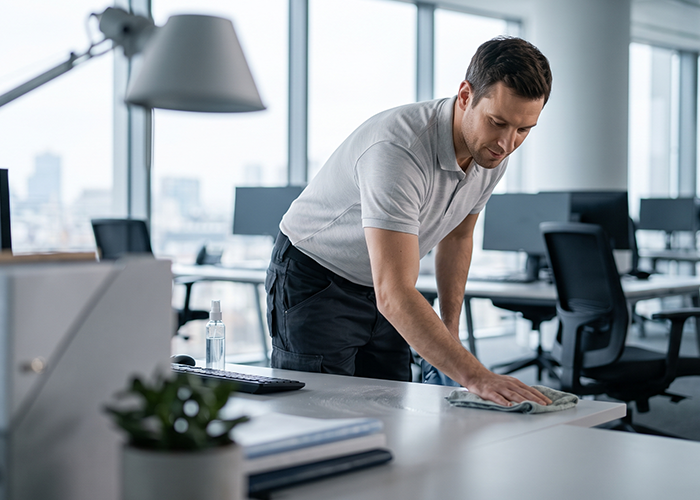
Cleaning is the process of removing visible dirt, dust, grease, debris, and other contaminants from surfaces. This is usually done with soap or detergent and water, along with physical wiping or scrubbing.
Cleaning does not necessarily kill bacteria or viruses. Instead, it removes many of them by lifting contaminants away from the surface. Once dirt and organic material are removed, the remaining microbes become easier to eliminate if sanitizing or disinfecting is needed afterward.
Think of cleaning as the foundation of every maintenance routine. Floors, desks, countertops, windows, furniture, and common touchpoints all benefit from regular cleaning because it improves appearance while reducing the overall amount of contamination.
Commercial cleaning also extends the life of building materials. Dirt and grime can wear down flooring, damage finishes, and stain surfaces over time. Routine cleaning helps protect these investments while creating a more welcoming environment for employees and visitors.
What Is Sanitizing?

Sanitizing focuses on reducing the number of germs on a surface to levels considered safe according to public health standards.
Unlike basic cleaning, sanitizing specifically targets microorganisms. However, it does not eliminate every germ. Instead, it lowers the bacterial count enough to reduce the risk of spreading illness under normal conditions.
Sanitizing is commonly used in environments where food is prepared or served. Restaurants, cafeterias, break rooms, and commercial kitchens often sanitize food-contact surfaces after they have been cleaned.
Many businesses also sanitize shared equipment throughout the day, including:
- Breakroom tables
- Coffee stations
- Shared keyboards
- Conference room tables
- Refrigerator handles
- Water fountains
- Employee lockers
For sanitizing products to work effectively, surfaces usually need to be cleaned first. Dirt and grease can interfere with the product’s ability to reach microorganisms.
What Is Disinfecting?
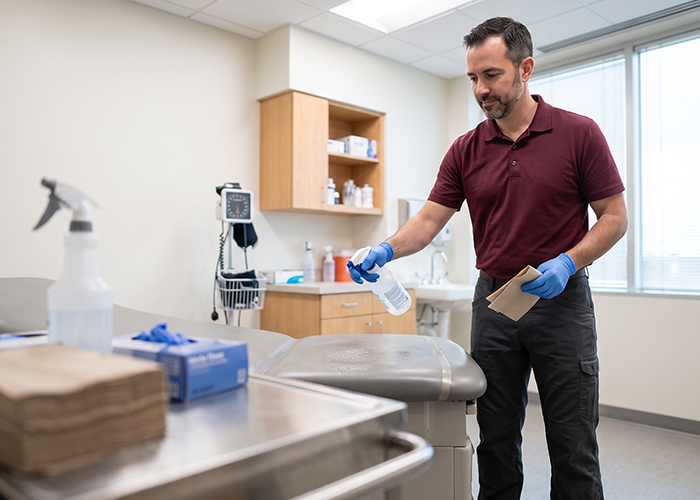
Disinfecting uses Environmental Protection Agency (EPA)-registered products designed to kill bacteria, viruses, fungi, and other harmful microorganisms on hard, nonporous surfaces.
Unlike sanitizing, disinfecting aims to destroy a much broader range of pathogens. It is commonly performed in environments where infection control is especially important, including healthcare facilities, medical offices, schools, fitness centers, and public buildings.
Disinfectants require proper contact time, sometimes called dwell time. This means the surface must remain visibly wet for the amount of time specified on the product label. Wiping the product away too soon may reduce its effectiveness.
It is equally important to remember that disinfectants work best after surfaces have been cleaned. Dirt can act as a barrier that prevents disinfectants from reaching germs.
Comparing Cleaning, Sanitizing, and Disinfecting
Although they are closely related, each process serves a unique purpose.
| Process | Primary Goal | Removes Dirt? | Reduces Germs? | Kills Germs? |
| Cleaning | Remove dirt and debris | Yes | Some are removed physically | No |
| Sanitizing | Reduce germs to safe levels | Usually after cleaning | Yes | Some |
| Disinfecting | Kill disease-causing microorganisms | Usually after cleaning | Yes | Yes |
Understanding these differences helps facility managers avoid overusing products while maintaining healthy environments.
When Should Commercial Facilities Use Each Method?

Different situations call for different levels of treatment. Instead of applying the same process everywhere, businesses should evaluate each area based on how it is used.
Cleaning Is Best for Daily Maintenance
Routine cleaning should occur throughout every facility. It removes dust, fingerprints, spills, and everyday buildup before they become larger problems.
Areas that typically require daily cleaning include:
- Office workstations
- Reception areas
- Hallways
- Floors
- Windows
- Restrooms
- Break rooms
Regular cleaning also creates a professional appearance that reflects positively on the organization.
Sanitizing Works Well for Shared Surfaces
Sanitizing is especially valuable where multiple people touch the same objects throughout the day.
Examples include:
- Shared office equipment
- Kitchen counters
- Food preparation areas
- Employee dining spaces
- Shared seating
- Cafeteria tables
These areas benefit from frequent sanitizing because they experience repeated human contact.
Disinfecting Is Important During Higher-Risk Situations
Disinfecting should be reserved for situations where harmful pathogens present a greater concern.
These situations include:
- Medical facilities
- After someone becomes ill
- High-touch public spaces
- Schools during flu season
- Fitness centers
- Public restrooms
- Waiting rooms
Using disinfectants strategically helps reduce the spread of illness without relying on unnecessary chemical use throughout the building.
High-Touch Surfaces That Need Extra Attention
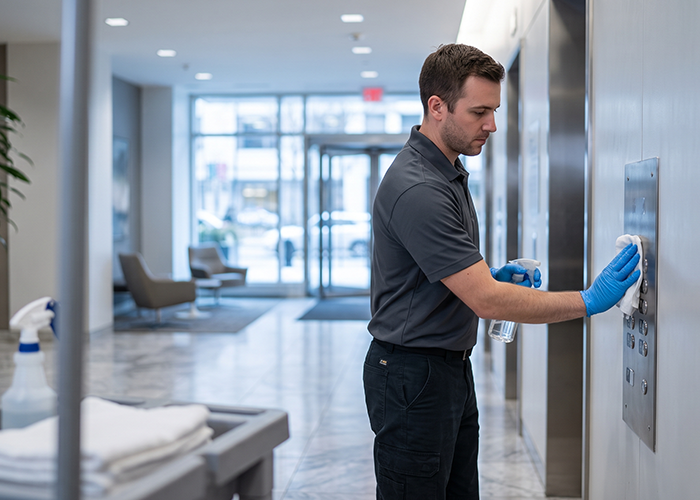
Some surfaces collect significantly more germs because people touch them repeatedly throughout the day.
These include:
- Door handles
- Elevator buttons
- Light switches
- Handrails
- Touchscreens
- Time clocks
- Copy machines
- Shared phones
- Faucet handles
- Toilet flush handles
- Break room appliances
- Conference room equipment
A professional maintenance plan identifies these high-touch areas and schedules appropriate cleaning, sanitizing, or disinfecting throughout the day.
Common Mistakes Businesses Make
Many facilities unintentionally reduce the effectiveness of their cleaning efforts by following outdated habits or rushing through the process.
Some of the most common mistakes include:
- Skipping the cleaning step first. Dirt prevents sanitizers and disinfectants from working properly.
- Using too much disinfectant. More chemicals do not always produce better results. Following label directions is essential.
- Ignoring dwell time. Many disinfectants need several minutes of contact before they kill microorganisms.
- Using the wrong product for the surface. Certain chemicals can damage flooring, electronics, stone, or specialty finishes.
- Failing to train staff. Even high-quality products cannot compensate for improper procedures.
Professional maintenance providers reduce these risks by following standardized cleaning protocols and manufacturer recommendations.
Why Professional Facility Maintenance Makes a Difference
Commercial facilities often require more than routine janitorial work. Large buildings have varying traffic levels, specialized equipment, and industry-specific regulations that influence cleaning requirements.
Professional maintenance teams understand which products should be used in different environments. They also know how frequently various surfaces require cleaning, sanitizing, or disinfecting based on occupancy, building use, and seasonal health concerns.
Consistent maintenance schedules also improve operational efficiency. Employees spend less time dealing with preventable cleanliness issues, while visitors experience a cleaner and more inviting environment.
Another advantage is consistency. Professional providers document procedures, monitor quality, and adjust schedules as building needs change throughout the year.
Industry-Specific Cleaning Needs
Every industry has unique expectations when it comes to facility maintenance.
Healthcare facilities often require frequent disinfecting because patients may have weakened immune systems.
Schools balance routine cleaning with regular disinfecting of classrooms, cafeterias, and common areas to reduce illness among students and staff.
Manufacturing facilities prioritize removing dust, grease, and industrial residue while maintaining safe working conditions.
Retail stores focus on customer-facing cleanliness while also disinfecting fitting rooms, checkout counters, shopping carts, and payment terminals.
Office buildings typically emphasize daily cleaning with targeted sanitizing and disinfecting of shared workspaces and high-touch surfaces.
Tailoring maintenance plans to each industry helps facilities remain cleaner while using resources more efficiently.
Building a Smarter Cleaning Strategy
Rather than relying on a single approach, successful facilities develop layered maintenance programs that combine cleaning, sanitizing, and disinfecting where appropriate.
A typical strategy may include:
- Daily cleaning throughout the building
- Routine sanitizing of shared surfaces
- Scheduled disinfecting of high-risk areas
- Additional disinfecting during illness outbreaks
- Regular inspections to verify cleaning quality
This balanced approach supports healthier workplaces without unnecessary product use or excessive labor.
The Right Maintenance Today Prevents Costly Repairs Tomorrow.
Understanding the difference between cleaning, sanitizing, and disinfecting allows businesses to make smarter maintenance decisions that protect employees, customers, and visitors.
A customized maintenance program helps your facility stay clean, compliant, and prepared for whatever the day brings.
Your facility deserves dependable care from experienced professionals. Contact us online or call 704-405-6000 to learn how our maintenance solutions can help protect your investment and create a cleaner, safer environment.
Related Articles: